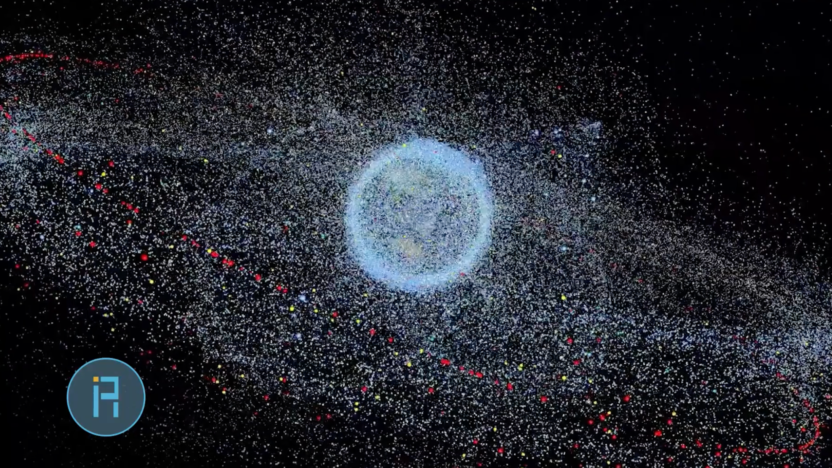
Earth’s orbit is “on track for a catastrophe.” That was the rather alarming prediction of the authors of a recent piece published in The Conversation. As the argument goes, orbit is filling up fast, and both nation-states and private companies plan to add tens of thousands of spacecraft to the thousands already there. This has “cultural, spiritual, and environmental” effects, say the authors, University of Regina astronomer Samantha Lawler and Bond University law faculty member Gregory Radisci. One of those effects being that without a shared set of rules, it is only a matter of time before two satellites collide. The trouble is, they’re not entirely wrong.
Consider this: satellites now move around one another every day. Starlink satellites alone carried out an eye-watering 300,000 avoidance manoeuvres last year, according to one report filed with the U.S. Federal Communications Commission, and if all satellites were to cease undertaking such maneuvers, we could expect to see a serious collision in about 3.8 days. Moreover, the effects of any crash would likely not be restricted to the spacecraft involved: According to the much-discussed Kessler effect (or, if you prefer, the equally assonant ablation cascade,) a collision could scatter debris which could then strike other spacecraft, creating more debris, which could then strike other spacecraft, and so on until, in the gloomiest possible course of events, parts of orbit would become unusable and we would be trapped on Earth.
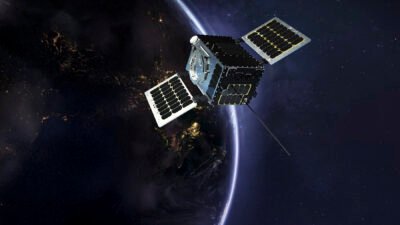
Now, the obstacle to dealing with this is not engineering. Satellites may carry efficient electric propulsion systems for fine maneuvers alongside more forceful systems; and know where they are with some precision, thanks to trackers, GNSS receivers and ground-based tracking. They can see trouble coming thanks to warnings fed by space-surveillance networks; and onboard software can plan and execute avoidance maneuvers without waiting for some human controller to finish their tea.
The difficulty is keeping order. There is no single body that manages orbital traffic. Though the Earth’s orbit is held in common, each country licenses its own satellites, and though there is some coordination, it remains voluntary. For as long as this is the case, the likelihood of two spacecraft crashing remains higher than one might like. It is worth noting that on some estimates, by 2030 there may be as many as 60,000 new satellites circling the planet.
As dramatic as it seems, the Kessler effect is not the only thing we need to worry about. Attribution — that is, saying exactly why this or that satellite failed, crashed or narrowly avoided a collision — is not straightforward. Given how fraught international relations are at the moment, and given that analysts far and wide have warned of hostile state action in orbit, the deliberate disabling of a satellite is not beyond the realms of possibility. Governments could thus face the awkward task of having to say whether or not some foreign actor was behind some orbital calamity. Naturally, in doing so, they risk inflaming things or, on the other hand, letting some rival foreign power off the hook and looking weak. Neither is ideal.
The answer to the problem posed by the proliferation of satellites in orbit is not to stop sending them there. Even if that were possible, it would be both impractical and self-defeating. Space, as it is often said, is indeed the backbone of the world economy. It underpins financial transactions, logistics, communication, defence. It is critical infrastructure. But it is precisely because of this — because space is the backbone of the world economy — that the stakes are so high, and it is why we must make the system tougher. Practically, that means improving traffic coordination, gathering and sharing better data on the positions of satellites and putting in place shared rules for maneuvers and close approaches. Engineers are already doing their bit, developing thrusters and systems that allow spacecraft to move, and move autonomously.
But the other side of this has to do with communication. We cannot rule out a collision taking place in space. Given this, satellite operators and their partners — the companies developing cameras, sensors or propulsion systems, among others — must, first, loudly make the case for space and, secondly, explain how they handle risk. But they would also be wise to prepare for the mild outrage of those who do not quite grasp what they do or why it matters, and tend to notice space only when things go wrong: for with the maturation of space, and its evolution from a field of spectacle and speculation to one of services, networks and — as Orbion’s Brad King has rather beautifully put it — “unglamorous competence” — comes a change in how we have to talk about it. Put simply, crisis communications has become key.
Take it all in all, our predicament has far less to do with the cleverness of our machines and much more to do with how we organize ourselves. We have many operators working in a common space but no single body to keep everything in good order. Traffic management exists for aeroplanes; it can exist for spacecraft, too: building on the U.S. Space Surveillance Network would be a good start. Add clear rules around debris detection and cleanup, and we can make sure that our satellites, unseen and so often unsung, remain right where they belong: well out of each other’s way and doing their jobs.
Harry Readhead is co-founder and creative director of Sonder London, a communications agency that works with senior figures in space, defense and equity investment. Readhead is also a best-selling ghostwriter and journalist whose work has appeared in The Guardian, The FT and The Times, among many other titles worldwide.
SpaceNews is committed to publishing our community’s diverse perspectives. Whether you’re an academic, executive, engineer or even just a concerned citizen of the cosmos, send your arguments and viewpoints to opinion (at) spacenews.com to be considered for publication online or in our next magazine. If you have something to submit, read some of our recent opinion articles and our submission guidelines to get a sense of what we’re looking for. The perspectives shared in these opinion articles are solely those of the authors and do not necessarily represent their employers or professional affiliations.