COLORADO SPRINGS — Turion Space said it has raised more than $75 million in a Series B funding round led by Washington Harbour Partners.
The California-based startup develops satellites and payloads focused on space domain awareness and non-Earth imaging, or missions that involve observing other objects up close in orbit.
The round includes follow-on investments from existing backers such as Aurelia Foundry, Forward Deployed VC and FoundersX, along with new investors including Center15 Capital, Magnetar Capital, HOF Capital and Industrious Ventures.
Founded in 2021 by veterans of SpaceX, Lockheed Martin Skunk Works and Boeing Phantom Works, the company has launched two spacecraft to date. Its latest, Droid.002, was deployed in March and is designed to track objects in orbit and monitor debris. Its predecessor, Droid.001, recently completed a three-year mission and has been deorbited, said Turion’s co-founder and chief executive Ryan Westerdahl.
Turion’s satellites are built to maneuver in orbit, allowing them to approach and observe other spacecraft, he said. “One thing we’re excited to do is adding maneuverability.
Such capabilities are aimed at the defense market as the U.S. Space Force increases focus on monitoring foreign satellites and responding to potential threats in orbit. Space domain awareness, or the ability to track and understand activity in space, is now a higher priority for both governments and the private sector as the number of satellites and debris objects continues to grow.
Turion says it has secured 28 U.S. government contracts to date, including awards from the U.S. Space Force, NASA and the National Reconnaissance Office.
The new funding will be used to accelerate spacecraft development and expand manufacturing capacity, the company said. Turion aims to increase production from about eight satellites per year to 40, while also building out its mission control software platform, Starfire, designed to operate satellites across multiple orbits.
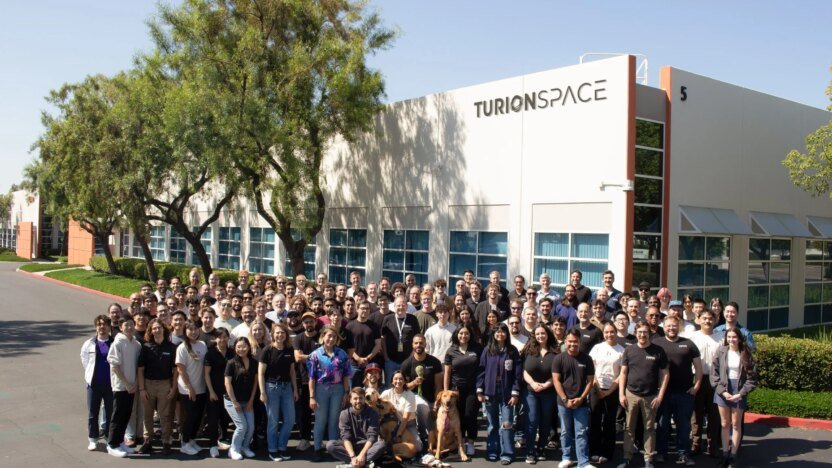
The company employs about 200 people and is working toward deploying a fleet spanning low Earth orbit and geosynchronous orbit.
Turion is developing a next-generation spacecraft, called Droid Viper, which will integrate multiple payloads and offer greater maneuverability. The first launch could take place as early as 2027, Westerdahl said.
While the primary market is defense, the company sees commercial demand as well. One potential application is inspecting malfunctioning satellites. “We’ve had discussions on the space insurance segment side to help diagnose issues,” Westerdahl said.
Mina Faltas, a partner at Washington Harbour Partners, said Turion is addressing “mission critical needs for U.S. national security” and aims to build a “commercial layer of space infrastructure for the U.S. and its allies.”