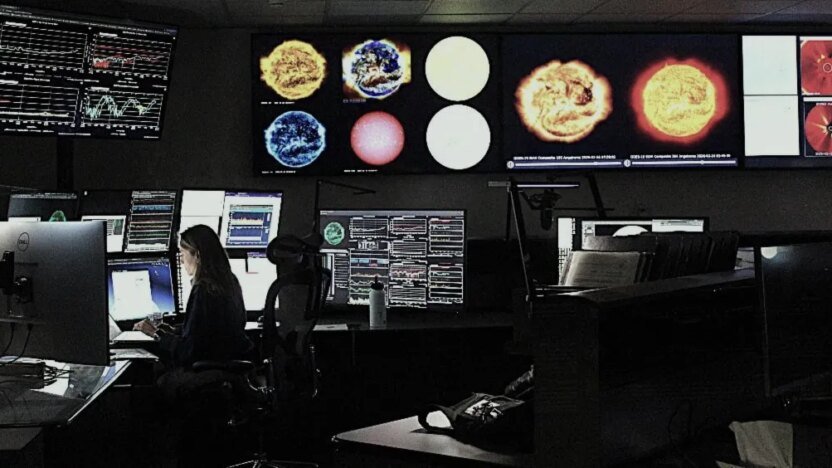
BOULDER, Colorado – The sun’s volatile outbursts, such as storms, flares and other space weather, can cause serious harm to astronauts like the Artemis 2 crew who recently came home, and to satellites. That’s why the Space Weather Prediction Center (SWPC) in Boulder, Colorado — part of the National Oceanic and Atmospheric Administration — is working to sharpen space weather forecasting skills, honing the ability to monitor the space environment and provide solar-terrestrial information. The SWPC, the official source of space weather alerts and warnings for the United States, is driven to monitor solar outbursts that can impact satellite communications, GPS systems and electric power transmission here on Earth.
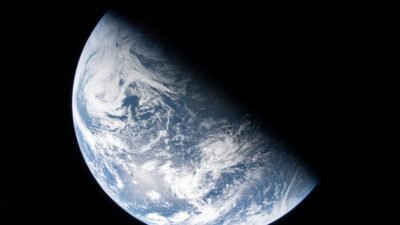
Gathering data about the sun’s output also played a major role during the 10-day Artemis 2 mission, where operators on the ground kept a 24/7 vigil to keep an eye on threatening solar radiation storms.
“There is a growing vulnerability from space weather to a range of technologies,” SWPC Director Clinton Wallace told SpaceNews. “Prediction is giving our best educated, informed decision based on observations and models that we have.”
To that end, understanding solar storm phenomena is a critical component to producing accurate space weather forecasts, from onset of an event to location, duration and severity, Wallace said. But space weather forecasting is decades behind terrestrial weather prediction, he added.
“We’re a lot younger. We have a long ways to go to catch up and have the same level of maturity,” said Wallace, who added that the SWPC is working to develop better models, based on physics research and artificial intelligence, that can forecast events while also reporting on uncertainty and risk.
Protecting the Artemis 2 crew
Since becoming the SWPC Director in March 2019, Wallace championed the creation of a new space weather prediction testbed. That dedicated room enables customers, researchers, and forecasters to engage collaboratively on improvements to observations, models and forecast products.
In April and May of 2025, the testbed saw more than 70 participants from NASA, the U.S. Air Force, commercial space companies, research institutions and international partners taking part in Artemis 2 exercises. Participants worked together through simulated radiation storm scenarios and assessed space weather modeling measures.

Wallace said that the SWPC testbed exercises for the Artemis 2 flight “far exceeded every expectation.”
That hands-on, immersive experience sharpened space weather forecasting knowhow, said Shawn Dahl, a service coordinator at the SWPC. “It gave us the opportunity to test, evaluate and improve our models on the spot,” he said.
Dahl added that, prior to the Artemis 2 launch, SWPC had frequent decision-support conversations with the responsible launch weather officer about solar energetic protons and whether any thresholds might be reached. And during Artemis 2, the SWPC was able to confidently assess that no significant solar weather would coincide with the mission.
“After launch and early in the mission, we had a few occasions when we needed to quickly decide whether solar energetic protons might increase, but we did not think that would be the case and relayed that information to NASA via our forecaster deployed to Houston,” Dahl said.
Megaconstellation hazard
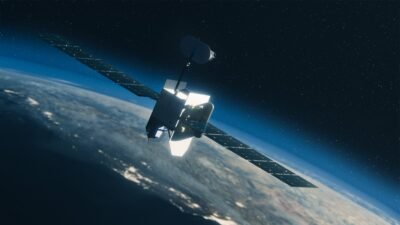
Beyond astronaut health, the SWPC is also working to enable technology such as GPS system spacecraft and Starlink and Amazon Leo megaconstellation satellites to deal with the brunt of solar weather. These satellites are at risk: a May 2024 solar storm caused severe impact to low Earth orbit satellites.
“Surprisingly, we saw an estimated billion dollars-plus of economic impact to farmers that rely on precision GPS, just that one sector of agriculture,” Wallace said.
A recent geomagnetic storm also produced extra drag on Starlink satellites, disrupting their orbit.
“We could actually start to see the satellites drop several kilometers,” said Wallace. “Then you get into those scenarios where we start denying our ability to fly in low Earth orbit and cause a threat to other satellites. We don’t want to have collisions of satellites in LEO.”
Sun-gazing spacecraft
New spacecraft, alongside ground-based tools, will make the process of monitoring and forecasting space weather easier in the future, resulting in more comprehensive forecasts with greater lead times.
A new addition to the SWPC’s sun watching is NOAA’s Space Weather Observations at L1 to Advance Readiness – 1 (SOLAR-1) launched this past January. “It’s now on location and perhaps in operational mode by the end of April,” Dahl said, and is designed to continuously monitor the sun and space weather from that unique vantage point roughly one million miles from Earth.
Another space asset the SWPC is eagerly awaiting is the European Space Agency’s Vigil satellite, said Dahl.
Vigil, to be launched in the early 2030s, will be positioned to attain a side view of the sun, on the lookout for potentially hazardous solar activity before it is detectable from Earth. “That side view will tell us if a coronal mass ejection is headed towards Earth or not, and if so help us predict arrival at Earth more timely,” Dahl said.
Creating a space weather-ready nation
One of Wallace’s central objectives is promoting a “space weather-ready nation.”
“Because of our reliance on technology,” Wallace said, “we’re becoming increasingly vulnerable. That doesn’t mean we haven’t made progress and seen improvements in the last decade,” he continued, but there’s a need to ensure that new scientific insights are used in forecasting and infrastructure preparedness.
To that end, SWPC is working with the Department of Homeland Security on benchmarks that define just how big solar storms can get and their potential impact.
“It’s very clear that we’re going to see space weather as one of these risks within a National Risk Register,” said Wallace. “Together, the whole U.S. government is trying to do everything in our power to protect the critical infrastructure that we rely on for our daily lives.”