
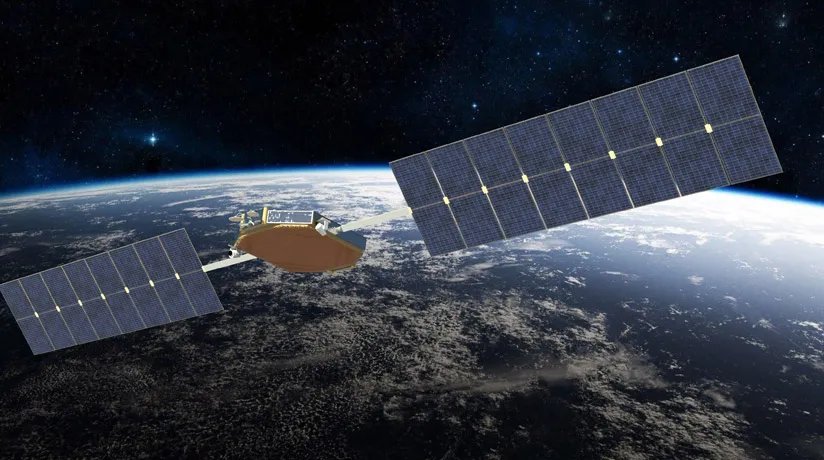
At the recent Mobile World Conference 2026 in Barcelona, the strong presence of Direct-to-Device (D2D) satellite services and the avalanche of press releases related to contracts signed between D2D satellite service providers and Mobile Network Operators (MNOs) gave the impression that large scale implementation of D2D services by MNOs is imminent. However, the truth is quite different.
Global availability of more advanced D2D services still unclear
If we take a closer look at the current status of D2D services, it’s apparent that the launch of these services has been limited to a relatively small number of countries and very basic cellular services like NB-IoT, messaging and narrowband data services. Because of the continued delay in launch schedules of more advanced constellations with more capacity, it still remains unclear when D2D voice and broadband data services will be available on a global scale.
So, full scale deployment of these services will probably take longer than promised by the satellite operators. The good news is that this gives time to solve certain shortcomings in the constellations and systems of the D2D satellite operators and mitigate omissions in the approach chosen by them.
Although there is a real and large-scale interest of the mobile industry to launch D2D services to extend the availability of their cellular service portfolio beyond the limited coverage of their terrestrial network, doing so will be much more complicated than D2D satellite operators have claimed. This is mainly caused by the fact that satellite systems, compared to terrestrial cellular systems, have to cope with specific space related challenges and limitations and the choice of the D2D satellite operators to apply a siloed approach in the deployment and provisioning of their services.
Limitations of satellite systems
Because of the limitations of GEO, MEO and LEO satellite systems compared to terrestrial cellular networks and the different frequency bands, space and ground segment design of each satellite constellations that support any kind of D2D services must account for the following:
- The specific characteristics of each constellation will make it more suitable to provide the best services in only a specific part of the full terrestrial cellular service portfolio, and
- There is not one satellite operator that can support each of these services at the best possible price to performance ratio.
Therefore, only a multi-constellation approach can provide a complete D2D portfolio to provide global coverage extension for the full terrestrial cellular services portfolio of MNOs and Mobile Private Networks (MPNs) for enterprises and government entities.
Instead of working with only one D2D satellite operator, a combination of multiple constellations will provide terrestrial cellular operators a more complete portfolio of D2D service and more independence from any one given satellite operator. This will offer better redundancies, service continuity and much quicker and larger geographic coverage, especially when legacy satellite operators are used as a part of this mix.
Siloed approach
A complicating factor for MNOs and MPNs to apply a multi-constellation strategy is the siloed deployment and provisioning models used by the different satellite operators.
For instance, D2D NB-IoT satellite operators like Iridium, Skylo, Sateliot and Qtech are using general roaming for MNOs to extend the coverage of their terrestrial networks, which can’t offer consistent network slicing and MEC across third party networks.
Starlink D2C would like to reduce the role of MNOs to mere resellers and deliver their service directly to the end-users to be completed with in-building coverage by the local MNOs.
Space Mobile has appointed Vodafone as their exclusive distribution partner for Europe who will, through their own ground segment infrastructure and a service creation and delivery platform provide MNOs across Europe with a certain level of service tailoring.
MDA, the satellite manufacturer that got stuck with Echostar’s D2D satellite constellation when it pulled out of the D2D game, is now planning to become a “neutral host” satellite operator which, through its own enabler platform, will provide MNOs, enterprises and government entities the possibility to become a virtual satellite operator on their satellite constellation.
Viasat, together with Space42 is taking it even a bit further, planning to launch a wholesale D2D satellite constellation to be used by other satellite operators to provide D2D services to their clients.
So, although the different models can work well for the provision of the specific D2D services of each satellite operator, the problem is that MNOs and MPNs will end up with a wide variety of deployment and business models. This will make it very inefficient and costly for MNOs to connect with these different D2D constellations in order to obtain a complete portfolio of D2D satellite services which matches their full terrestrial cellular service portfolio and support all use cases of their clients.
How to break silos in D2D
I believe that now is the right time for D2D satellite operators, who appear to be somewhat blinded by the bright light of their own constellations that shine down on us, to start looking down the chain and act to better service the needs of their distribution partners. As such, instead of only competing for their own piece of the pie, this in the end will make the whole pie much bigger.
To realize a quick and large-scale adoption of their services by MNOs, enterprises and government entities, D2D satellite operators need to make it easier for these entities to connect to their service in a more consistent manner. To facilitate this, the satellite industry should assess the following options to break the silos in D2D.
The best solution would be that all satellite operators of D2D will agree on one standardized deployment and provisioning model, and adjust their systems accordingly. However, as the different deployment and provision models are the direct result of the space and ground segment design of the different D2D satellite systems, this option isn´t feasible for constellations that are already fully or partly launched.
A more realistic option for these D2D satellite operators is to enter into partnerships with other D2D satellite operators like Lynk, Omni Space and SES have recently done. As such they can provide with their different constellations a D2D service portfolio that to a higher extent mirrors the terrestrial cellular service portfolio of their distribution partners, and offer access to these services through one consistent deployment model. However, as just two or three D2D constellations together still wouldn´t cover the whole terrestrial cellular service portfolio, this at best will bring us halfway.
This leaves us at this moment with just one option, and that is that all the D2D satellite operators will open up for intermediary platform providers that will provide through one platform with one consistent deployment and integration model access to all complementary D2D constellations which together can cover the whole terrestrial cellular service portfolio.
D2D services are at risk of becoming too complicated for MNOs, enterprises and government entities, and this is the best way to solve the problem.
Enrico Ottolini is co-founder and executive director of Planet Earth Connect. He has more than 25 years of extensive international experience in both the mobile and satellite communications industry. Based on this experience, he guides telecom operators and solution providers through the rapidly changing and fragmented LEO-sat landscape.
SpaceNews is committed to publishing our community’s diverse perspectives. Whether you’re an academic, executive, engineer or even just a concerned citizen of the cosmos, send your arguments and viewpoints to opinion (at) spacenews.com to be considered for publication online or in our next magazine. If you have something to submit, read some of our recent opinion articles and our submission guidelines to get a sense of what we’re looking for. The perspectives shared in these opinion articles are solely those of the authors and do not necessarily represent their employers or professional affiliations.