
WASHINGTON — Jordan is the latest country to sign the Artemis Accords as NASA works to attract more countries to its lunar exploration efforts.
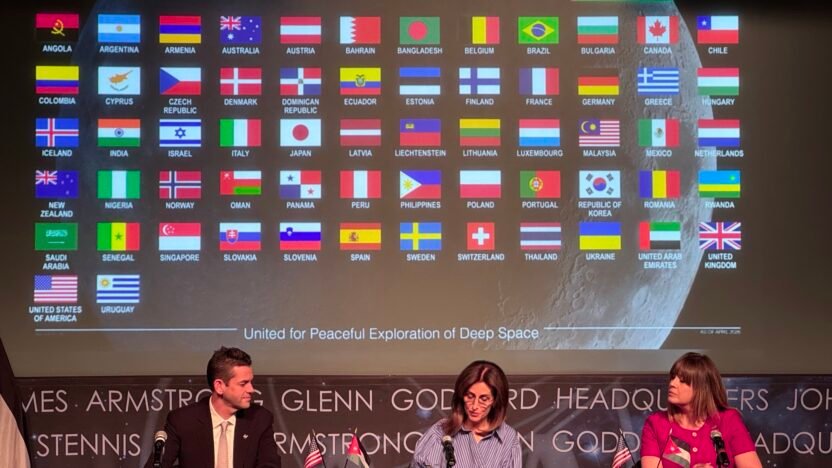
In an April 23 ceremony at NASA Headquarters, Dina Kawar, Jordan’s ambassador to the United States, signed the Accords on behalf of the country. Jordan is the 63rd country to sign the Accords and the second to do so this week, after Latvia signed April 20.
Signing the Accords, she said, is part of Jordan’s efforts to turn itself “into a regional and global hub” in science and technology. “This is a wonderful day for us, and the start of wonderful cooperation.”
“Space exploration represents the ultimate expression of optimism for the future,” Mike Gold, president of Redwire Space and a former NASA associate administrator who helped lead development of the Accords, told SpaceNews. “While the Middle East has faced a difficult period, Jordan signing the Artemis Accords shows that the spirit of exploration and optimism remains undiminished in the Hashemite Kingdom and in the region generally.”
The Accords, unveiled in 2020, outline best practices in safe and sustainable space exploration, building on the Outer Space Treaty and other agreements, from interoperability to deconflicting space activities. Increasingly, NASA is using the Accords as a vehicle for coordinating cooperation in the broader Artemis exploration effort, particularly with the lunar base program the agency announced in March.
“NASA’s pivot to the lunar surface and ramping up surface missions to one per month will create unparalleled opportunities for Jordan and numerous other nations to develop and contribute payloads, instruments and science that can travel to the moon,” Gold said. “Via NASA’s renewed focus on Artemis Accords signatories becoming a part of the Artemis program, the whole world will be able to join in this singular journey of discovery.”
At the event, neither the ambassador nor U.S. officials discussed specific contributions Jordan might make to Artemis. The country has flown a student-built cubesat and conducted analog missions in the country’s Mars-like terrain, NASA Administrator Jared Isaacman said.
“Jordan is moving fast and building a strong reputation in the greater space community,” he said at the signing ceremony. “They joined at a pivotal moment as we take the Accords’ principles and put them into practice with humanity’s return to the moon.”
Officials said at the ceremony they are working to get more countries to sign the Accords. “There is no time to lose. We must keep building on these achievements, and I know Administrator Isaacman is doing just that,” said Ruth Perry, acting principal deputy assistant secretary for oceans and international environmental and scientific affairs at the U.S. State Department. “This is only the beginning as we expand the Accords and unlock the potential of outer space.”