SAN FRANCISCO — SpaceComputer, a Singapore-based startup developing distributed computing infrastructure, is preparing to test its hardware and software in orbit later this year.
The startup’s first product, Space Fabric, is a hardware and software architecture with secure and physically isolated computing elements to link ground stations with satellites and enable satellites to share computing resources. Space Fabric is being integrated with printed circuit boards (PCBs) in preparation for launch in October on an unidentified satellite.
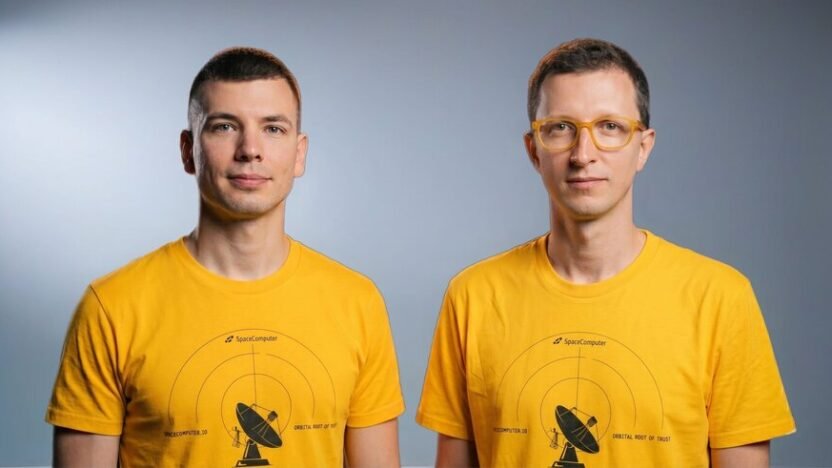
Despite growing investment in space-based infrastructure including orbital data centers, “there isn’t yet much thought about the space internet,” Daniel Bar, SpaceComputer co-founder and a blockchain entrepreneur, told SpaceNews. “There needs to be an open, protocol-oriented approach that would make it possible for different stakeholders to interface to each other, rather than operate in silos.”
Bar and SpaceComputer co-founder Filip Rezabek, a Technical University of Munich research associate and PhD student focused on network security, “believe that space, as the next digital frontier, will evolve like the internet did: open, interoperable and based on public protocols relying on cryptographic security and strong data integrity assurances,” Bar said.
Space Fabric PCBs will generate cryptographic keys to secure data “in orbit, so there is no need to trust us or the operators that run Space Fabric,” Bar said. “On top of that, we added redundancy of two different secure elements that are attesting against each other.”
Use cases for Space Fabric range from secure computing and communications to provenance verification for geospatial data.
Another SpaceComputer product under development is Orbitport, an application programming interface that serves as a secure gateway, linking satellites and payloads with terrestrial compute. Orbitport will make interaction with ground station providers “a more seamless experience,” Rezabek said.
SpaceComputer has raised $10 million in pre-seed and seed funding since it was established in 2024 by Bar and Rezabek. Advisors include University of California, Santa Barbara, computer science professor Dahlia Malke and Will Heltsley, former SpaceX vice president of propulsion.