TAMPA, Fla. — Starcloud is looking to raise at least $200 million in a deal that would double the two-year-old orbital data center startup’s valuation to about $2.2 billion, a source close to the situation confirmed.
The funding talks, first reported by The Information, come roughly a month after the Redmond, Washington-based venture announced a $170 million Series A round that made it the fastest company in accelerator Y Combinator’s history to reach unicorn status.
Starcloud has raised about $200 million to date for a proposed constellation of 88,000 satellites to move data center computing beyond terrestrial infrastructure constraints.
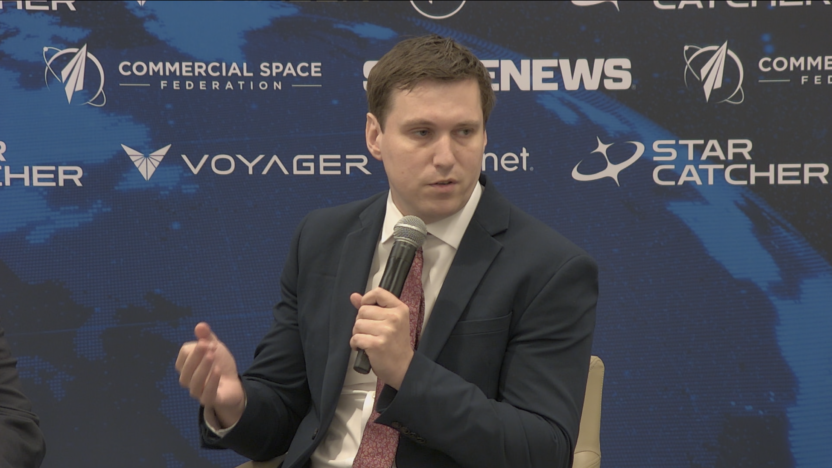
Speaking April 30 during a SpaceNews orbital data center event in Washington, D.C., Starcloud co-founder and CEO Philip Johnston said its plans are being boosted by growing interest in the emerging market, not least as Elon Musk’s SpaceX plots its own constellation for it with up to one million satellites.
“There seems to be strong investor demand in what we’re doing,” he said, “especially since Elon has been so vocal about the possibilities.”
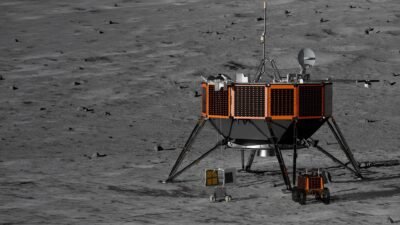
SpaceX is keen for customers for its communications business and the Starship rocket it is developing, Johnston added, which Starcloud is relying on to deploy its 3-ton Starcloud-3 spacecraft.
Starcloud aims to target a different part of the market than SpaceX, which Johnston expects will mainly use orbital data center capacity for internal workloads at xAI and Tesla.
SpaceX is less likely to focus on “infrastructure and energy as a service,” Johnston added, where customers can sell computing capacity to their own users.
He expects Starship to be ready to deploy customer payloads toward the end of this decade.
That timeline would put Starcloud on a path to compete with terrestrial data centers on energy costs in three to five years, after first using smaller satellites to provide cloud and edge services for other spacecraft.
In the meantime, Starcloud is focused on two technical hurdles: developing a large, low-cost deployable radiator and making high-performance chips work in a higher-radiation environment.
The startup’s Series A round was led by venture capital firm Benchmark and private equity giant EQT Ventures. Additional investors included NFX, Nebular, Adjacent, 776 Ventures, Fuse Ventures, Manhattan West and Monolith Power Systems, alongside Y Combinator.