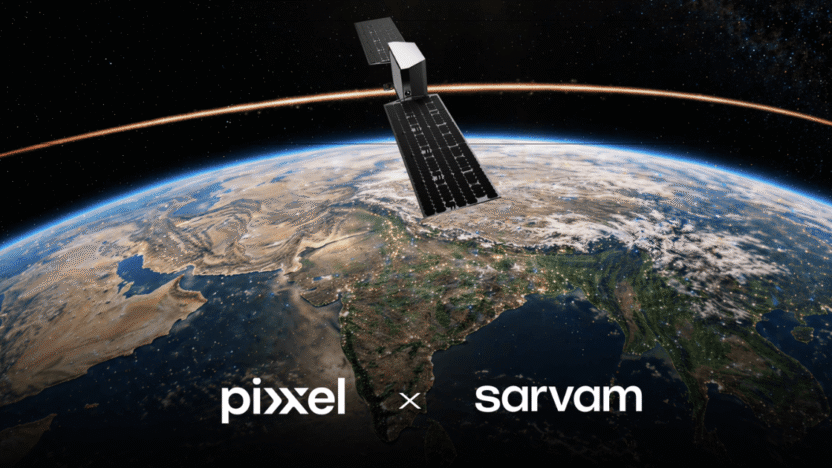
TAMPA, Fla. — Indian hyperspectral imaging startup Pixxel plans to test orbital data center technology on a pathfinder satellite designed to deliver geospatial intelligence directly from space.
The venture announced plans May 4 to develop a 200-kilogram-class demonstrator that could be ready for launch before the end of the year.
The satellite would join six Firefly imaging spacecraft Pixxel already operates in low Earth orbit. Like other conventional LEO systems, those satellites must first downlink a large amount of raw data to ground stations before it can be processed into usable intelligence.
According to Pixxel, the pathfinder would carry data center-class processors similar to those used on Earth for AI training and inference. Indian AI technology firm Sarvam has partnered to provide onboard language models and an inference software platform.
“Ground-based data centers are facing increasing constraints around energy, land, regulation and scale,” Pixxel CEO Awais Ahmed said in a statement, “and the current model is becoming harder to sustain environmentally.”
Orbital computing platforms could tap into abundant solar energy while avoiding other constraints that terrestrial infrastructure faces. U.S.-based SpaceX and Blue Origin are among the space giants also pursuing this emerging market, although sizable technical and business hurdles remain.
“For Pixxel to build the next generation of space infrastructure, we have to help shape this shift, not watch it happen from the sidelines,” Ahmed added.
“With Sarvam, this mission is our first step toward making orbital data centers real, operational, and scalable from India.”
The demonstrator would be developed at Gigapixxel, Pixxel’s upcoming India-based facility designed to ramp up satellite production to 100 units.
Pixxel deployed its first six Firefly satellites last year across two SpaceX rideshare missions, each designed to capture more than 135 spectral bands at five-meter resolution.
The constellation aims to reveal changes for government and commercial customers that conventional imaging systems can miss, including early signs of vegetation stress, sources of water contamination and mineral signatures.
Pixxel also plans to deploy more capable imaging satellites called Honeybees, extending coverage into shortwave infrared wavelengths across around 250 spectral bands, compared with Firefly’s focus on visible and near-infrared imaging.