
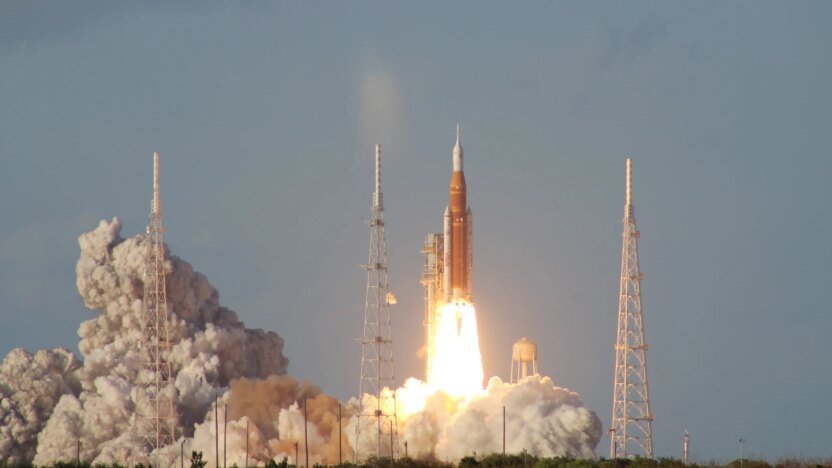
The Artemis 2 mission has captured global attention for obvious reasons. It signals a return to the moon, reflects geopolitical ambition and showcases the next phase of human spaceflight.
But for those of us focused on supply chains, Artemis 2 stands out for a different reason.
It exposes a problem the space industry has not fully solved, and one that will determine whether these missions scale beyond a handful of programs.
Behind every Artemis 2 milestone is a supplier network made up of thousands of organizations operating across multiple tiers. Many of them will never interact directly and, in many cases, organizations don’t have clear visibility into where every component originates.
That level of coordination and insight is difficult to achieve at this scale, yet critical to address.
The real complexity sits lower on the chain
There is a tendency to view aerospace supply chains through the lens of prime contractors and major systems integrators, but that is only part of the picture.
Artemis 2 depended on a supplier ecosystem that spans thousands of organizations across multiple tiers. Many of these companies never interact directly, yet their components must align precisely across design, manufacturing and integration. That’s where things can break down without full visibility across the supply chain.
A single component can depend on multiple upstream suppliers, each with its own systems, data formats, and processes. That level of understanding is usually strong at the top of the supply base, but it weakens quickly beyond Tier 1, creating a blind spot at exactly the point where risk increases.
When something goes wrong, teams struggle to answer basic questions: where a part originated, which systems depend on it or how quickly an alternative can be sourced. In high-stakes programs, those gaps translate directly into delays and cost exposure.
Artemis 2 did not introduce this problem, it did make it impossible to ignore.
Traceability is no longer a compliance function
Programs like Artemis 2 depend on continuous traceability to operate at scale. NASA’s use of a digital thread shows how traceability is shifting from record-keeping to operational infrastructure.
When a component fails, teams need immediate clarity. Where did it come from? How was it produced? Where else is it used? What are the approved alternatives? In many organizations, that information still sits across disconnected systems. The response becomes manual, slow and dependent on institutional knowledge.
Traceability needs to function as a shared, real-time capability across the supply network. Without it, even well-managed programs will struggle to maintain pace as complexity increases.
The weakest link is often the least visible
Lower-tier suppliers remain one of the most persistent blind spots in aerospace supply chains.
These organizations often produce specialized components with long lifecycles and limited sourcing alternatives. In some cases, they are not even aware they are supporting a space program. That lack of alignment creates risk. If a supplier changes a process, exits the market or encounters quality issues, upstream organizations often find out only when it disrupts production or integration.
In one example shared by a former NASA supply chain executive, a critical component had not been sourced in decades. When the part failed, teams had no immediate visibility into whether the supplier was even still in business or how quickly an alternative could be qualified and onboarded because the part had not been sourced in over 30 years. The part itself was simple. The issue was no one knew where it came from, how to replace it or if an alternative could even be sourced.
The industry is solving the wrong layer of the problem
There is growing pressure to apply AI across supply chains, including in aerospace. The potential is real. AI can help map dependencies, connect data and accelerate decisions.
But it is not the starting point.
Across industries, the limiting factor is still fragmented product data and inconsistent identification standards. When that foundation is weak, adding intelligence does not resolve the issue. It can actually make it significantly worse.
What we see consistently is that advanced technologies deliver value only when applied to connected, standardized data environments, not fragmented ones.
For space programs, the priority is not adding more tools. It is establishing the data foundation those tools depend on.
From supply chains to coordinated ecosystems
Artemis 2 highlighted a broader shift in how supply chains operate.
The traditional model assumes a linear flow of information, moving step by step between organizations. That model breaks under pressure because data is handed off, transformed and often lost along the way.
This mission showed what is required is a coordinated ecosystem where all participants operate from the same current data at any point in time.
That distinction determines how systems perform under stress. When disruptions occur, linear supply chains react slowly because information is fragmented. Coordinated ecosystems respond faster because decisions are based on shared, consistent data.
What space industry leaders should do now
As commercial space activity expands, the complexity Artemis 2 exposed will become more common. With more suppliers, more partners and more pressure on timelines and cost, organizations coordinating aerospace supply ecosystems need to take deliberate action.
First, product identification must be standardized across the network. Different naming conventions and data structures create friction that compounds at scale.
Second, product data must be treated as shared infrastructure. It cannot be recreated at each supplier or site. It needs to be governed centrally and shared across partners in real time.
Third, visibility must extend beyond Tier 1 suppliers. Risk accumulates in the lower tiers, and that is where insight is weakest today. That responsibility ultimately sits with prime contractors, systems integrators and supply chain and program management teams. These groups are best positioned to enforce shared standards and align data consistently across supplier networks.
Finally, systems must support coordinated execution, not just visibility. Seeing a disruption is not enough. Partners need to act on it in a consistent way.
These are not new ideas. What is clear is that they are now required.
The next phase of space will be defined by coordination
The space industry is entering a phase where scale will define success. More missions are being planned, more commercial players are entering the market, and supply networks are becoming more complex and more interdependent.
The organizations that succeed will not be defined solely by technical capability, but by how effectively they coordinate across their ecosystems. That requires investment in shared data standards, connected systems, and governance that extends across organizational boundaries.
The technology to reach the moon is already in place. The next step is ensuring the systems behind it can operate at the scale the next decade will demand.
Paul Harris is director of solution consulting at Loftware.
SpaceNews is committed to publishing our community’s diverse perspectives. Whether you’re an academic, executive, engineer or even just a concerned citizen of the cosmos, send your arguments and viewpoints to opinion (at) spacenews.com to be considered for publication online or in our next magazine. If you have something to submit, read some of our recent opinion articles and our submission guidelines to get a sense of what we’re looking for. The perspectives shared in these opinion articles are solely those of the authors and do not necessarily represent their employers or professional affiliations.