
Missile defense has traditionally been framed around detection, tracking and interception. Golden Dome changes that calculus, broadening the focus to the entire distributed infrastructure enabling the architecture, placing propulsion front and center.
The system envisions a constellation of thousands of satellites equipped with sensors and interceptors that would represent the first U.S. space weapons in orbit, with data centers in space providing automated command and control through a cross-domain AI-enabled network. But the effectiveness of that architecture ultimately depends on whether satellites can maneuver in contested space and whether interceptors can maintain precise control at critical moments.
That reality is reshaping how companies approach propulsion.
“There’s a clear signal from the government that they want to tap into commercial innovation for Golden Dome,” said Matt Magaña, president of Space, Defense and National Security at Voyager. “Golden Dome is really a strategic thrust – a much more focused push into driving the capabilities we need to actually do the mission.”
The operational environment Golden Dome demands is one of persistent maneuverability across orbital and atmospheric domains. Satellites must reposition rapidly, avoid threats and maintain operational continuity under pressure. Interceptors must sustain stability and precision through engagements where fractions of seconds determine mission success.
“As programs like Golden Dome accelerate the buildout of resilient, multi-layer space architectures, the propulsion systems that make those satellites maneuverable and survivable have to keep pace,” Magaña said. “That’s exactly what we’re delivering, and we are now scaling production even further.”
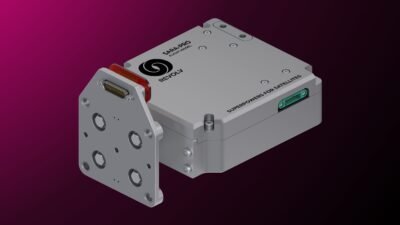
At Voyager, propulsion is treated as foundational infrastructure across the defense stack. The company’s controllable solid propulsion technologies and high-efficiency electric propulsion systems address both sides of that requirement, enabling precision maneuvering for interceptors and orbital agility for satellites operating in increasingly contested environments.

Scale, however, remains the defining challenge.
“Golden Dome only becomes real if industry can deliver at operational tempo,” Magaña said. “It takes an industrial base built for speed, scale and resilience. Companies like Voyager exist to close those gaps, bringing together the propulsion, energetics and electronics that make modern defense architectures real.”
Deploying a constellation of interceptors in orbit requires not only advanced propulsion and vehicle technology, but also sophisticated sensor fusion, tracking algorithms and real-time command software. No single capability determines the outcome. But without propulsion systems engineered for endurance, responsiveness and production at scale, none of the rest functions as designed.
As Golden Dome moves from concept toward deployment, success will be defined by how it performs under real-world conditions. Voyager is building the propulsion foundation that performance depends upon.