WASHINGTON — Impulse Space has raised $500 million to expand production of orbital transfer vehicles and other spacecraft to support growing commercial and government demand.
The company announced June 2 it closed a Series D round led by 137 Ventures and BANNER VC. Impulse Space did not disclose the company’s valuation but noted it has now raised more than $1 billion, including a $300 million Series C round one year ago.
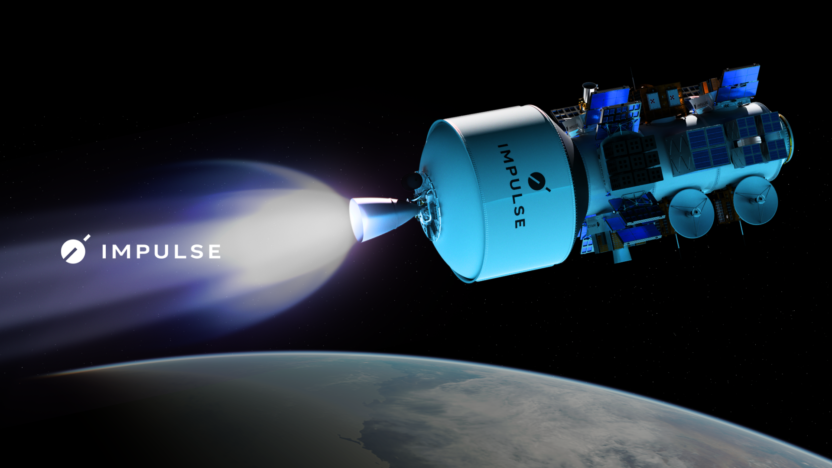
The company said the funds will allow it to scale up production of vehicles like Mira, a maneuverable spacecraft that can deploy satellites and host payloads, and Helios, a high-energy kick stage under development to quickly move spacecraft from low Earth orbit to geostationary orbit and beyond.
“As activity in orbit increases, in-space mobility becomes foundational,” said Adam Ramada, managing partner at BANNER VC, in a statement. “Impulse is building the infrastructure that enables the next layer of growth for the space economy.”
Eric Romo, president and chief operating officer of Impulse Space, said in an interview that the company was seeing strong demand for its products across civil, commercial and national security space customers.
Commercial customers are interested in Helios to get satellites to GEO faster. “The economics of commercial GEO satcom are challenging,” he said. “Helios helps those customers get to orbit more quickly, and that improves their economics.” That includes its Caravan rideshare missions to GEO starting in 2027 that will use Helios.
There are growing national security opportunities for Impulse because of increasing Space Force budgets and a push toward concepts like dynamic space operations, where spacecraft maneuver more frequently.
“A lot of that net new growth is for highly mobile in-space assets that provide defense for our assets already in space,” he said.
Impulse also sees an opportunity at NASA with the agency’s plans to establish a moon base. The company announced last year it is working on a lunar lander that can deliver three tons of cargo to the lunar surface.
NASA’s lunar base plans “are exactly what we were asking for last year” when the company disclosed its proposed lander, Romo said. “We’d like to be in this medium size of a couple of tons. We think we’ve got a good architecture for that.” He added the company planned to propose its lander to NASA for the Commercial Lunar Payload Services, or CLPS, 2.0 procurement that is ongoing.
Investors saw the same market trends that Impulse did and reached out to the company, leading to the new funding round that he said came together quickly. “It’s indicative a little bit of our progress and a little bit of where the market is now.”
One of the lead investors, 137 Ventures, has been a shareholder in SpaceX, where Impulse Space founder and chief executive Tom Mueller led propulsion development for many years.
“Tom helped transform access to space at SpaceX, and now he’s tackling the industry’s next major challenge: in-space mobility,” said Justin Fishner-Wolfson, managing partner at 137 Ventures, in a statement.
Romo said the funds would help Impulse Space grow to meet demand for its vehicles. The company now has 500 employees and about 200 open positions. The company had taken a more cautious approach to growth, he said, which will change with the new funds.
“This allows us to put the throttle down a little bit more on hiring than I think we felt comfortable doing in the past,” he said.
The company doesn’t expect to expand production facilities, noting it has room at existing locations in California and Colorado, as well as a site in Mojave, California, for testing thrusters. “It’s more about iteration, speed and development there, just getting these products to market,” he said.
The new round comes just ahead of SpaceX’s initial public offering, which seeks to raise tens of billions of dollars and value SpaceX at as much as $2 trillion. That has prompted speculation that other space companies will also seek to go public, but Romo said Impulse Space has no plans to do so at this time.
“We are very fortunate to have a lot of patient capital” from investors who aren’t looking for a near-term exit, he said. Impulse also isn’t pursuing any mergers or acquisitions that could be done if the company’s stock were publicly traded.
“Somebody asked me once, ‘Do you aspire to be a public company executive?’ No, I aspire to build a great space business,” he said. “That’s what we care about.”