WASHINGTON — Axiom Space announced June 4 that it added more than $175 million to its latest funding round, with Japan’s largest bank joining the company’s investors.
The company said it added the funding to a $350 million round it announced in February that was led by Type One Ventures and the Qatar Investment Authority, with participation from several other investors. The additional funding brings the size of the round at its final close to more than $525 million.
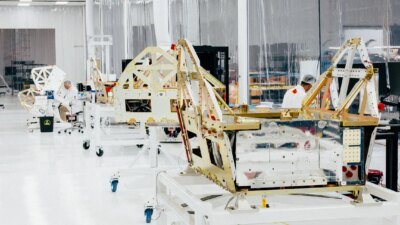
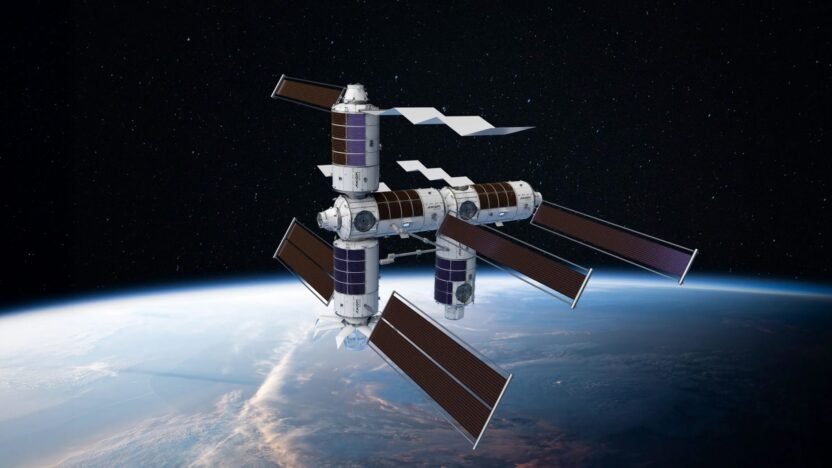
The company said the additional funding was an “opportunistic extension” of the round to capitalize on investor interest in the company’s commercial space station plans and work on lunar spacesuits for NASA’s Artemis lunar exploration campaign.
“Investor interest in this round outpaced what we set out to raise, which speaks to the moment we’re in,” Jonathan Cirtain, president and chief executive of Axiom Space, said in a statement.
The extension of the round included a new investor, MUFG Bank Ltd., Japan’s largest bank. Existing investors also contributed.
“Axiom Space is building the orbital infrastructure that will define the next era of the space economy,” said Takumi Hashizume, managing director at MUFG Bank and head of its space innovation office, in a statement. “We are committed to supporting the companies that make commercial human space exploration and the global space economy sustainable for the long term, and we see Axiom Space’s leadership as central to that future.”
The additional funds, the company said, will support work on its space station and spacesuit programs as well as its broader space infrastructure and technology advancement roadmap.
Keeping the original option
The new funding comes days after Axiom and other commercial space station companies learned that NASA would no longer pursue an alternative approach to supporting development of commercial successors to the International Space Station.
A NASA spokesperson said June 1 that the agency was abandoning a proposal it revealed at the Ignition event in March to develop a government-owned “core module” that would be installed at the ISS and to which commercial modules could dock. NASA argued that would provide a more viable path to standalone commercial stations given the agency’s perception that demand for such stations was developing slowly.
Commercial space station developers largely opposed that proposal and stated their objections in response to a request for information the agency issued.
“We got 1,500 pages of input from industry,” said Joel Montalbano, NASA acting associate administrator for space operations, at a June 2 National Academies meeting. “Industry input to us was, ‘Hey, you need to go back to the original option.’”
Montalbano confirmed NASA would stick to its approach of supporting companies working on stations. An industry day on the agency’s plans is expected in the next few weeks.
“Industry response was loud and clear, and we took it,” he said.
Axiom was among the companies that welcomed NASA’s decision not to pursue a core module.
Axiom “appreciates NASA’s decision to continue the Commercial LEO Destinations program under its established framework. Cooperation between private industry and NASA is paramount to preserving the continuous U.S. human presence in LEO,” the company said in a social media post June 2.