America’s electric grid is entering a period of unprecedented strain. Utilities across the country are scrambling to keep up as power-hungry AI data centers expand at a staggering pace, often consuming as much electricity as small cities.
As these data centers proliferate, surging energy demand and rising consumer electric bills are growing concerns. But there is another important, far less discussed risk: the vulnerability of a strained grid to space weather, and the potential consequences for everyone and everything that relies on it, including those data centers and the AI capabilities becoming entrenched in our everyday lives.
Among those who should be most concerned — and who should become leading advocates for improving space weather forecasts and preparedness — are the big tech companies building and operating these massive data centers.
For decades, scientists have warned that a severe solar storm could cripple portions of the electric grid by damaging high-voltage transformers, some of the most expensive and difficult-to-replace pieces of electrical infrastructure. With advance warning, grid operators can take actions that significantly reduce the risk of catastrophic damage from such a storm. Yet investment in predicting and planning for space weather hazards has remained badly out of proportion to the potential damage.
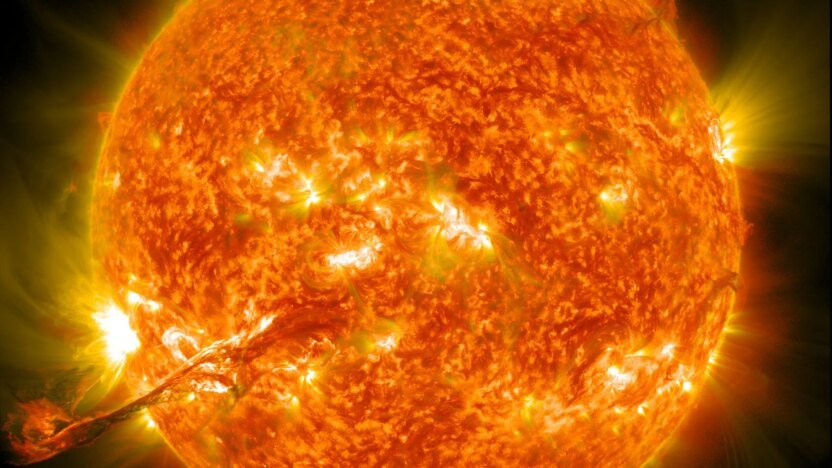
Space weather is driven by eruptions on the surface of the Sun, which can send billions of tons of charged particles toward Earth in what’s known as a coronal mass ejection. When these storms interact with Earth’s magnetic field, they can induce electrical currents in transmission lines, overheating and permanently damaging high-voltage transformers.
Manufacturing and replacing these transformers can take months or years, especially if failures occur across multiple regions simultaneously — a scenario experts say is plausible in the event of a Carrington-like storm. The Carrington Event, one of the most extreme solar storms on record, struck in 1859 and knocked out telegraph communications worldwide.
The economic toll of an extreme solar storm has been estimated in the trillions of dollars, while even less severe events can damage and disrupt the infrastructure and technologies that underpin modern society. Now, the stakes are even higher, as data centers strain the very grid they — and all of us — depend on.
The North American Electric Reliability Corporation recently warned that extreme power fluctuations associated with AI model training represent a “high likelihood, high impact” threat to grid reliability. During training runs, electricity demand can swing by hundreds of megawatts in an instant — sudden shifts capable of destabilizing power systems and triggering cascading outages. During a severe space weather event, these risks multiply dramatically.
Most electricity consumers can tolerate brief outages or temporarily reduce consumption during periods of grid stress. Data centers cannot. They operate continuously, and even short interruptions can corrupt workloads, damage hardware or cause significant data loss. Backup generators and battery systems help bridge temporary outages, but they can’t sustain operations during a prolonged blackout.
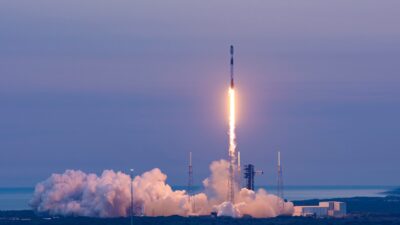
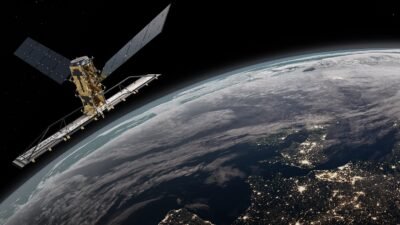
There is currently some momentum toward better space weather forecasts. Recent progress includes the launch of NOAA’s SOLAR-1 satellite in 2025. Recently declared operational, it is the first satellite built specifically for continuous space weather monitoring. Positioned between Earth and the Sun, it will provide faster and more reliable warnings for some incoming solar disturbances. Yet, because the satellite only sees the Earth-facing side of the Sun, it can miss active regions lurking on the other side.
In another positive development, NOAA’s Space Weather Prediction Center is working to modernize its forecasts and alerts by tailoring them to specific industries, including electric utilities and infrastructure operators.
But far more needs to happen to bring space weather forecasting anywhere close to the accuracy and lead time of terrestrial weather forecasting. The tech giants behind the AI revolution can help move the needle by:
- Articulating to lawmakers the importance of space weather forecasting and preparedness to protecting the electric grid and AI systems critical to national security and society at large.
- Incorporating severe space weather scenarios into operational planning and continuity exercises, and funding applied research on grid resilience.
- Working closely with utilities and grid operators to understand how large, variable data center loads interact with grid stability during space weather disturbances.
- Sharing operational data that could improve space weather modeling and forecasts.
AI is changing our world in ways we have only begun to imagine, becoming increasingly integral not just to online research and business productivity, but also to defense systems, cybersecurity, logistics networks, and critical infrastructure. As that dependence grows, the grid’s resilience against space weather becomes both an economic and a national security imperative.
Another major solar storm will eventually strike. The companies building the future of AI should be among the loudest voices pushing to ensure our energy infrastructure is ready for it.
Scott McIntosh is the vice president of space operations for Lynker Space and served as deputy director of the National Center for Atmospheric Research from 2019 to 2024.
SpaceNews is committed to publishing our community’s diverse perspectives. Whether you’re an academic, executive, engineer or even just a concerned citizen of the cosmos, send your arguments and viewpoints to opinion (at) spacenews.com to be considered for publication online or in our next magazine. If you have something to submit, read some of our recent opinion articles and our submission guidelines to get a sense of what we’re looking for. The perspectives shared in these opinion articles are solely those of the authors and do not necessarily represent their employers or professional affiliations.