WASHINGTON — Orbion, an independent small-satellite propulsion company based in Michigan, has delivered 33 electric propulsion units to York Space Systems for a U.S. military satellite constellation, the company said, marking the first time York has publicly identified Orbion as a propulsion supplier.
The units are Orbion’s Aurora Hall-effect electric propulsion systems, designed for small satellites. York, based in Colorado, holds multiple contracts to build spacecraft for the U.S. Space Force’s Space Development Agency, which is fielding the Proliferated Warfighter Space Architecture — a planned network of hundreds of low-Earth orbit satellites for data transport, tracking and missile-defense missions.
Orbion did not specify the end customer for the satellites, but York’s publicly disclosed production work is overwhelmingly tied to contracts with the Space Development Agency, making it likely the propulsion units support SDA missions.
In a Jan. 13 news release, York Chief Technology Officer Michael Lajczok said building and sustaining national security constellations requires partners who are “proven on orbit and reliable in production.” Orbion said propulsion units from earlier production runs are already operating on York spacecraft in orbit.
Hall-effect thrusters are a class of electric propulsion that small satellites depend on to raise orbit after launch, maintain position, avoid collisions and execute controlled de-orbiting at the end of a mission.
While electric propulsion is now standard on many small satellites, the supply chain has lagged demand. Manufacturing capacity remains constrained, leaving propulsion a recurring bottleneck as constellation builders push to scale.
Brad King, Orbion’s co-founder and chief executive, said the company completed delivery of the 33 thrusters to York in November 2025. He told SpaceNews Orbion has ramped production in response to rising orders from both government and commercial customers.
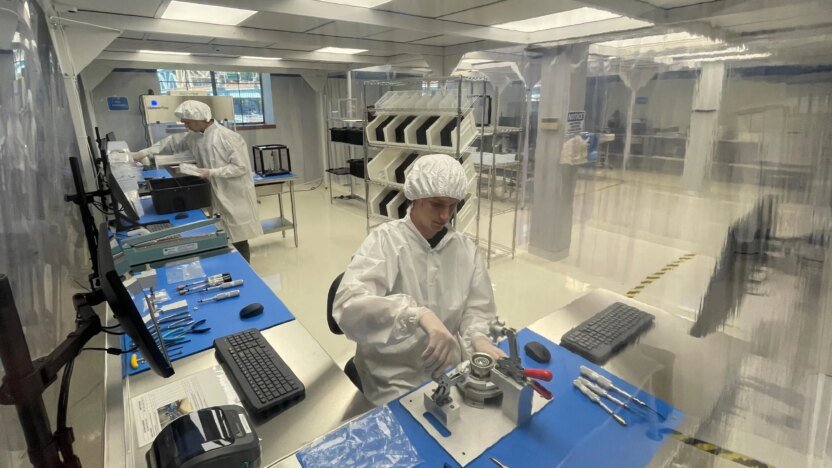
Orbion’s factory in Houghton, Michigan, currently produces about 12 propulsion units per month, King said. “We’ve demonstrated 150 units a year, and we’re incredibly proud of that. We expect to increase that by about 50% next year and then again the year after.”
King said Orbion’s current order book is evenly split between government and commercial customers, with about 30% of its commercial business coming from international buyers.
The disclosure underscores how subsystem suppliers such as propulsion manufacturers are becoming increasingly visible as proliferated military constellations move from pilot programs to sustained production, exposing the industrial capacity needed to support them.