COLORADO SPRINGS — U.S. defense contractors BAE Systems and Lockheed Martin are accelerating internal investments in maneuverable satellite designs, betting that military advocacy for “dynamic space operations” will translate into sustained demand for spacecraft that can move, coordinate and respond in orbit.
At the Space Symposium this week, both firms outlined separate efforts to fund and fly demonstration spacecraft designed to maneuver on orbit, shadow other satellites and operate as part of more networked architectures.
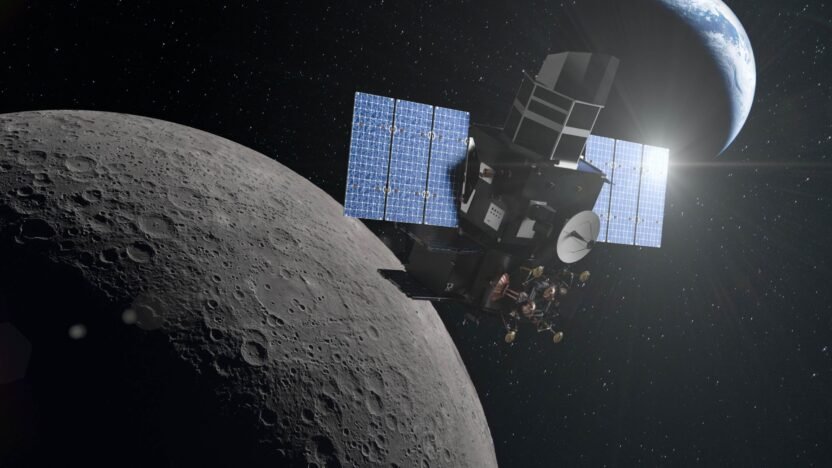
BAE Systems on April 14 introduced a new spacecraft platform, called Ascent, with a payload capacity of about 2,200 kilograms. The satellite is designed to be refuelable and could serve as a space tug, moving payloads between orbits or deploying secondary payloads for military customers.
“We’ve heavily invested not only in the technologies, but also manufacturing capabilities,” said Brad Shogrin, vice president and general manager of BAE Systems Space & Mission Systems. He said the company is targeting a first pathfinder launch in 2027 for a classified customer. Shogrin declined to detail the refueling interface or whether BAE is working with an external provider.
Demos planned for 2028
Lockheed Martin on April 13 discussed plans to deploy small and medium satellites under what it calls its Next-Generation Space Dominance line. The designs include a smallsat known as NGSD Vanguard and a larger, in-space refuelable spacecraft called NGSD Sentinel, both aimed at missions requiring autonomous maneuvering and coordination across multiple assets.
Tim Lynch, the company’s vice president of mission strategy, said the satellites are intended to demonstrate rendezvous and proximity operations (RPO) as well as “battle management command, control and communications” — a capability in which spacecraft receive tasking, interpret it and coordinate with other systems in near real time. RPO is the ability to approach, inspect or shadow another spacecraft in orbit.
The vehicles are being built using buses and components from Lockheed Martin’s subsidiary Terran Orbital, with common avionics, software and payload interfaces.
“One of the major markets we’re seeing is the orbital warfare market, the RPO market, the contested space market,” Lynch said. “So we’re putting a lot of investment into having capability that is ready now for those specific missions.”
The company plans to conduct on-orbit demonstrations as early as 2028 or 2029, with one or both satellites expected to operate in geostationary orbit, where they would perform maneuvering and command-and-control functions, Lynch said. The larger Sentinel variant is also being positioned for a potential bid on the Space Force’s planned procurement of geostationary surveillance satellites under a program known as RG-XX.
“The basic technologies have been proven,” Lynch said. “What these demonstrations are about is showing that we can do it at scale.”
The investments come as established contractors face a growing cohort of newer space companies pitching agile, software-defined spacecraft that can maneuver more freely than legacy systems.
Much of the current military satellite fleet was designed for long-duration missions with limited propulsion and predictable flight paths. That model is increasingly seen as insufficient in a more contested domain. U.S. officials have pointed to emerging capabilities from China and Russia, including satellites capable of rendezvous and proximity operations, as a driver of new requirements.