WASHINGTON — A Falcon 9 launched a South Korean imaging satellite and dozens of secondary payloads May 3, illustrating the continued demand for SpaceX rideshare launches.
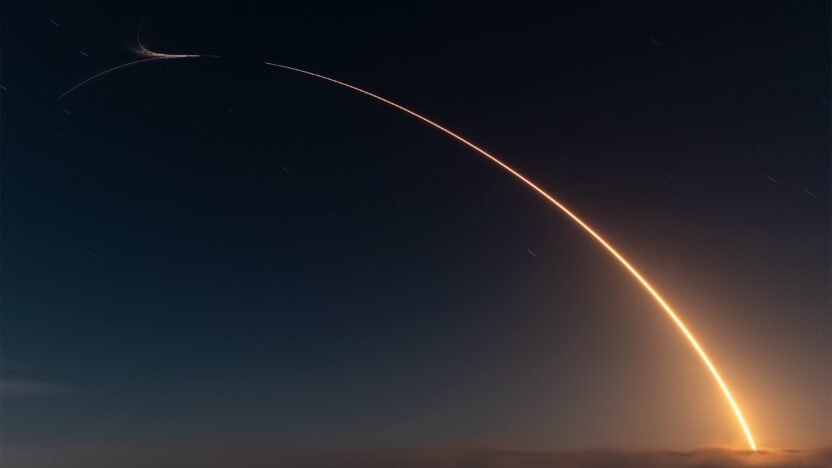
The Falcon 9 lifted off from Vandenberg Space Force Base in California at 3 a.m. Eastern. The first stage, making its 33rd flight, returned to Space Launch Complex 4E for a landing on a pad there.
The primary payload for the mission was CAS500-2, a 500-kilogram imaging satellite developed by the Korea Aerospace Research Institute carrying a high-resolution optical payload. A similar satellite, CAS500-1, launched in 2021 on a Soyuz-2.1a.
The launch also carried 45 secondary payloads placed, along with CAS500-2, into sun-synchronous orbits. This flight was billed as a more traditional rideshare mission, with a single primary payload, rather than as part of SpaceX’s Transporter and Bandwagon series of dedicated rideshare missions.
Among those secondary payloads were three Pelican high-resolution imaging satellites built by Planet. One of the three Pelican satellites is owned by the Swedish Armed Forces, part of a multiyear “low nine-figure” agreement Planet announced in January to provide imagery and intelligence solutions for the country’s military.
Also on the launch were seven Hawk for Earth Observation, or HEO, satellites built by Italian company Argotec for the IRIDE constellation. There are now 15 HEO satellites in orbit and 31 overall for IRIDE, a constellation that the Italian government has invested more than 1 billion euros in.
EarthDaily had six imaging satellites on the launch, built by Loft Orbital. They join a pathfinder satellite launched last June as part of a planned constellation to provide “AI-ready” imagery.
Indian startup GalaxEye launched Mission Drishti, its first satellite and what the company says is the world’s first “OptoSAR” satellite that combines both an optical imager and a synthetic aperture radar. Iceye launched two of its own SAR satellites on the mission.
Other customers include Unseenlabs, which launched its BRO-21 radio-frequency monitoring satellite; Lynk Global, which launched two direct-to-device satellites; and True Anomaly, which launched one of its Jackal spacecraft days after raising $650 million.
The number and diversity of customers illustrates the continued demand for SpaceX’s rideshare services. This mission took place a little more than a month after the Transporter-16 dedicated rideshare mission, also to sun-synchronous orbit, with more than 100 payloads.