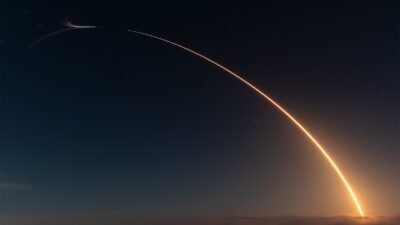
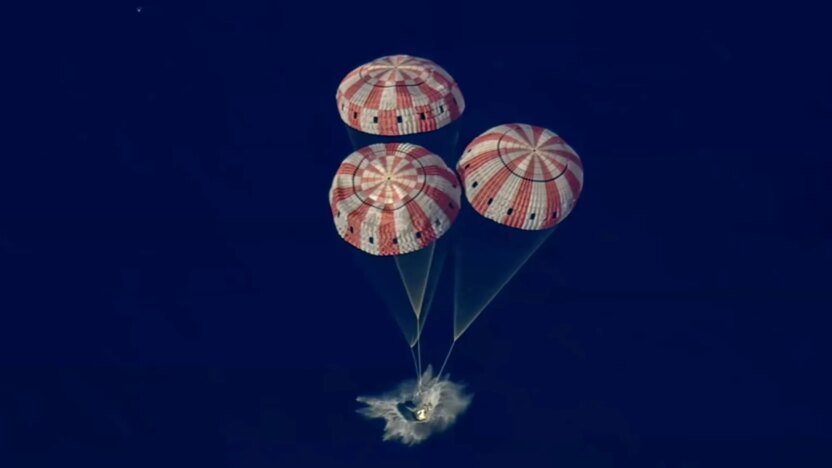
Artemis 2 was a success in more ways than one. The mission, lasting just over nine days, demonstrated that the Orion spacecraft could safely support a crew on a trip around the moon. Orion made it through the flight with only minor technical problems, none of which would hinder its use on Artemis 3 next year. Even the heat shield, a cause of concern for some before the launch, survived reentry in much better shape than Artemis 1.
The mission, however, had perhaps a greater impact culturally. The crew of Reid Wiseman, Victor Glover, Christina Koch and Jeremy Hansen connected with the public in ways that few expected before the flight. That included the images and video they shot — some on consumer-grade iPhones — as well as the enthusiastic descriptions they provided during the flight. Their camaraderie also shined in their appearances during and after the flight.
That success helped burnish NASA’s image. At NBC News’ “Common Ground” event in Washington April 23, NASA was held up as an example of a government agency with broad support: 67% of the public had a favorable view of it in a poll done months before Artemis 2.
“I saw the numbers on NASA. That should be 100% who supports NASA,” said Sen. John Fetterman (D-Pa.) later in the event.
That kind of public support should be a golden opportunity for NASA. Just before Artemis 2, it rolled out its revisions to Artemis, including an accelerated cadence of lunar missions to build a moon base. The success of Artemis 2 offered NASA the opportunity to make the case to the public, and to lawmakers, for the resources it needs to implement those ambitions.
Instead, NASA is dealing with a self-inflicted wound — or, rather, one inflicted by the administration. While Artemis 2 was on its way to the moon April 3, the White House released its fiscal year 2027 budget proposal, seeking a 23% cut in overall NASA spending and steeper cuts in science, space operations and space technology.
The detailed budget proposal released by NASA later the same day did little to help. The document, less than half the length of the version the agency released for its 2025 budget proposal, was riddled with errors and omissions. Not only did it fail to include some of the new initiatives NASA announced in March, like the lunar base and the SR-1 Freedom nuclear propulsion demo, it also excluded the missions it proposes to cancel, as if they never existed.
The result is that, rather than using the success of Artemis 2 to build support for its new exploration plans and the funding needed to achieve them, the agency was put on the defensive by Congress about the cuts, many of which Congress rejected when they were proposed last year.
That was evident the first time NASA Administrator Jared Isaacman went to Capitol Hill to defend the budget proposal. Over nearly three hours of testimony at an April 22 House Science Committee hearing, Isaacman had to address questions about the proposed cuts. Throughout the hearing members would praise NASA for the Artemis 2 mission, only to then say, “but,” and raise questions about cuts to science, aeronautics or education.
That was a theme that crossed party lines. “Shortchanging NASA is simply not smart,” said Rep. Brian Babin, (R-Texas), chairman of the committee and a self-described “budget hawk” whose concerns about the NASA cuts outweighed those about the national debt.
Isaacman, as a member of the administration, dutifully defended the budget, arguing that by being more efficient, NASA could do more science with less funding. That failed to convince skeptical committee members.
As a result, there were far more questions about programs facing cancellation — and, based on last year’s experience, likely to have their funding at least partially restored in a final spending bill — than about the new initiatives the agency recently announced. Artemis 2 could have propelled NASA’s exploration plans, but the budget proposal dragged them back down to Earth.
This article first appeared in the May 2026 issue of SpaceNews Magazine.