Every new infrastructure platform can look uneconomic at first. Early systems are often bespoke, supply chains immature and scaling doesn’t yet exist. The result: cost structures can appear daunting, if not irrational, when judged by the standards of those more traditional models.
Today, a familiar pattern is playing out in orbital data centers (ODCs), which have at times been dismissed as prohibitively costly and technically impractical. Critics point to launch costs, cooling, radiation-hardened electronics and the sheer complexity of building computing infrastructure in orbit as reasons to doubt their economic viability and long-term practicality.
Yet dismissing ODCs may echo a similar chorus that once scoffed at the internet itself.
In the early 1990s, for instance, it was Nobel Prize-winning economist Paul Krugman who argued that “by 2005 or so, it will become clear that the internet’s impact on the economy has been no greater than the fax machine’s.” Robert Metcalfe, an engineer and entrepreneur who helped invent ethernet, noted that the internet would “collapse catastrophically” due to congestion by the mid 1990s. Meantime, in a Newsweek article in 1995, Clifford Stoll — a renowned astronomer and computer security expert — opined that “no online database will replace your daily newspaper.”
Early in my career I had a first row seat as a technical program manager at Microsoft in the mid-90’s as we endeavored to match the performance and the economics of online video compared to broadcast TV. Compared to the elegantly scalable, near-zero-marginal-cost economics of broadcast television and theatrical film at the time, distributing video over the early internet looked economically absurd to most serious analysts of the era. Stoll, in his 1995 Newsweek essay, “The Internet? Bah!” declared flatly: “Video-on-demand, that killer application of communications, will remain a dream.”
The common refrain often centered around technical feasibility and the cost of connectivity. Dedicated leased lines, routers, switching infrastructure and international bandwidth was prohibitively expensive. Moving large volumes of data or video across networks just seemed irrational.
History would, of course, prove those prognostications premature and luckily were ignored by my streaming video colleagues at Microsoft, YouTube, Netflix and Brightcove, who despite the headwinds invested, innovated, built and disrupted an aging communications and entertainment economy.
As networks expanded, tech improved and manufacturing scaled, the cost of connectivity collapsed. Bandwidth prices fell by orders of magnitude. Entirely new industries emerged around the ability to move, store and process data globally. What began as a niche academic network became the central nervous system of the entire global economy.
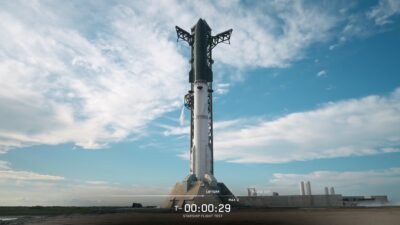
That’s not to say those early constraints were irrelevant. But cost curves tend to shift with the tech (such as for passive radiative cooling), allowing infrastructure to scale to industrial levels, and thus creating new opportunities. And while Sophia Space may hold a distinct edge in the former, the latter reflects a trend that virtually every space company is now experiencing: reusable launch vehicles and the promise of far larger payloads. Think Starship, New Glenn and Vulcan Centaur, to name just a few.
That suggests, as with the early internet, today’s skeptics may be grossly underestimating ODC potential; one that could fundamentally reshape the economics of operating on orbit, particularly as more data originates off-Earth.
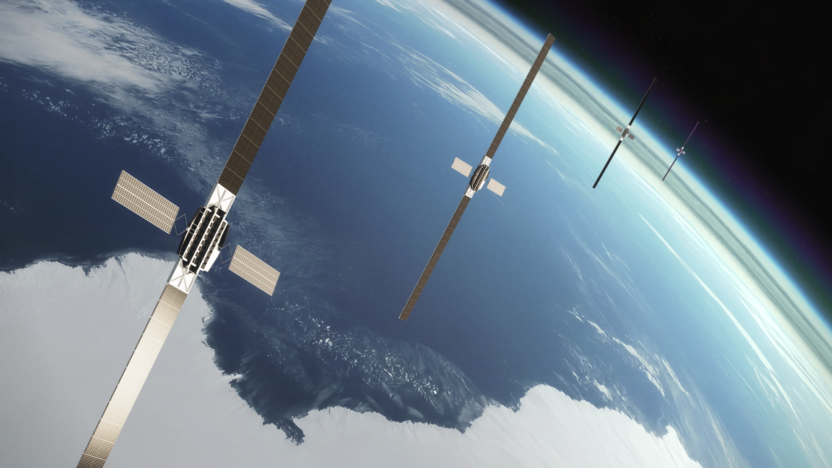
In fact, as new space infrastructure generates ever-larger volumes of data from observation constellations, defense sensing networks, scientific missions and industrial systems, it increasingly seems logical to move that processing closer to the source, reducing reliance on downlink bandwidth, ground stations and other bottlenecks that can slow operations. And with compute capacity that scales — in our case, simply by adding more TILES, or standardized modules that integrate power generation, avionics, computing hardware and thermal management with built-in radiators — the system begins to mirror the dynamics seen in past technology platforms.
Costs, in other words, fall as volume rises. Still, the economics of scale isn’t the only factor.
Other considerations also emerge that aren’t immediately obvious. When compared to terrestrial data centers, for instance, an often overlooked factor is deployment velocity. Building large terrestrial data centers can take years: Site acquisition, environmental reviews, power infrastructure upgrades, cooling requirements and construction timelines all slow capacity expansion. Lead times for critical components can stretch up to 24 months or longer.
Orbital infrastructure, however, expands differently.
Capacity grows through manufacturing throughput and launch cadence, rather than site development. If compute modules can be produced on industrial assembly lines, capacity expansion becomes a production and logistics problem, rather than a land and permitting one — which is increasingly important as global compute demand accelerates.
Just remember, infrastructure transitions always look impossible at first. Ask Steve Case, Marc Andreessen, Jeff Bezos, Mark Cuban, Chad Hurley, Reed Hastings, Jeremy Allaire and other internet pioneers who began to build the infrastructure of the modern digital economy decades before it was “economical.”
Orbital data centers are on a familiar trajectory. Today, they represent the beginning of infrastructure architecture. Tomorrow, they could become part of the physical backbone of this new space economy serving the Earth and the moon. And if history is any guide, the question may also shift from “Why would more computing happen in space?” to “Why didn’t we invest in it when we had the chance?”
Brian Monnin is co-founder and chief commercial officer at Sophia Space.
SpaceNews is committed to publishing our community’s diverse perspectives. Whether you’re an academic, executive, engineer or even just a concerned citizen of the cosmos, send your arguments and viewpoints to opinion (at) spacenews.com to be considered for publication online or in our next magazine. If you have something to submit, read some of our recent opinion articles and our submission guidelines to get a sense of what we’re looking for. The perspectives shared in these opinion articles are solely those of the authors and do not necessarily represent their employers or professional affiliations.