WASHINGTON — As SpaceX prepares for its next Starship test flight, the company’s prospectus underlines how critical that vehicle is to its ambitions.
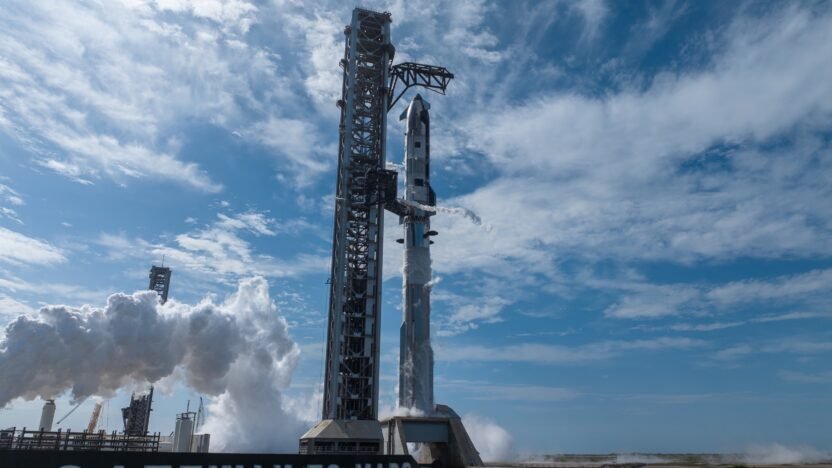
SpaceX confirmed late May 20 plans to attempt a launch of Starship on its 12th integrated test flight May 21 from Starbase, Texas. A 90-minute launch window for the suborbital mission opens at 6:30 p.m. Eastern, with the company reporting a 55% chance of acceptable weather.
This will be the first flight of version 3 of Starship and its Super Heavy booster, with a wide range of design changes to improve performance. This is the version of the vehicle that SpaceX plans to use for orbital launches as soon as later this year, carrying Starlink satellites, as well as for its Human Landing System lunar lander for NASA.
SpaceX has spent more than $15 billion on the Starship program, the company revealed in a May 20 prospectus filed with the Securities and Exchange Commission as part of plans to go public. That includes $3 billion in 2025 and nearly $900 million in the first quarter of 2026.
The company believes that, with version 3 of the vehicle, it is finally ready to begin orbital missions. “We expect Starship to commence payload delivery to orbit in the second half of 2026,” the company stated in the filing.
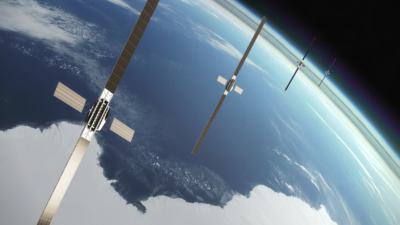
That will include both the large V3 Starlink satellites that can each provide one terabit per second of throughput and, in 2027, V2 Mobile satellites that will provide “more comprehensive” direct-to-device services. A single Starship launch will be able to carry up to 60 V3 Starlink satellites or 50 V2 Mobile satellites.
Those satellites, the company noted, require Starship. “Our current operational rockets, including Falcon 9 and Falcon Heavy, are not capable of deploying V3 satellites and V2 Mobile satellites.”
That underscores the dependence the company’s massive growth ambitions have on Starship. In the filing, the company estimated a total addressable market, or TAM, for its current and planned services of $28.5 trillion. By comparison, the World Bank estimated the gross domestic product of the United States in 2024 at $28.75 billion.
However, its space segment, which includes Starship and Falcon launches and related services, accounts for only $370 billion of that. In contrast, connectivity, which includes Starlink, has a TAM of $1.6 trillion and artificial intelligence $26.5 trillion.
Yet, as the prospectus makes clear, the ability of the company to achieve its goals in AI and connectivity depends on Starship launching Starlink and orbital data center satellites.
“Any failure or delay in the development of Starship at scale or in achieving the required launch cadence, reusability and capabilities thereafter would delay or limit our ability to execute our growth strategy, including the deployment of next-generation satellites, global satellite-to-mobile connectivity, and orbital AI compute, which could materially adversely affect our business, financial condition, results of operations, and future prospects,” the company stated in its prospectus.
“Achieving our targeted launch cadence will require significant progress on several key milestones and the continued investment of significant capital resources,” the company added, with those resources going toward production of Starship and development of “high-rate launch sites” for the vehicle.
“We face a number of material challenges and uncertainties in achieving these milestones,” it stated, such as “reliable high-cadence return-to-launch-site operations” for both the Super Heavy booster and Starship upper stage, rapid and frequent reuse of the vehicles, and “managing public and regulatory tolerance for anomalies during the transition to frequent operational flights.”
“If Starship does not achieve full reusability or rapid turnaround, we may experience higher per-launch costs, slower deployment timelines for our large-scale constellations (including our orbital AI compute program), delayed revenue growth, and increased overall capital requirements, and our brand and reputation may suffer,” SpaceX stated.
“AI compute satellites at scale need full Starship reusability to be economically compelling,” the prospectus added.
SpaceX added that it also needs to demonstrate in-space refueling of Starship to achieve other goals, including missions to the moon and Mars. “In-orbit refueling is complex, and we have not yet demonstrated or attempted it. We may not be able to develop, commercialize, scale, or successfully implement these or other strategic initiatives on the timelines we currently anticipate, or at all.”
If successful, though, Starship would open opportunities beyond the TAM identified in the prospectus, such as development of lunar industries. The company expects Starship V3 to carry up to 100 metric tons to orbit, increasing to 200 metric tons in future versions and enabling up to 1 million metric tons launched annually.
One example mentioned in the prospectus is using Starship for mining “rare materials” on the moon, an apparent reference to helium-3 given the document mentions its use for nuclear energy and quantum computing. “Using Starship’s high payload capacity, we believe these materials could be economically transported directly to Earth,” it stated. “Over time, this infrastructure has the potential to position the moon as a strategic industrial and transportation node.”