WASHINGTON — Spacecraft propulsion startup Arkadia Space has signed a deal to provide thrusters for a satellite being built by Reflex Aerospace.
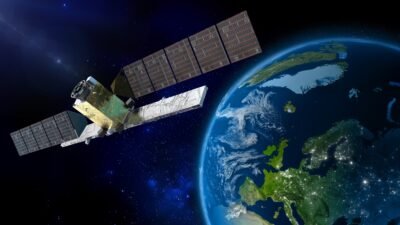
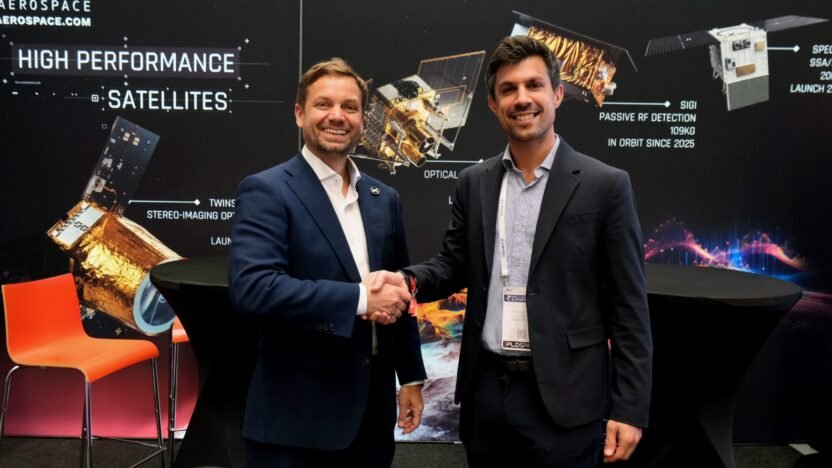
The companies announced an agreement June 9 under which Spanish startup Arkadia will supply thrusters using a green propellant, hydrogen peroxide, that will handle orbital maneuvers and end-of-life deorbiting for a 200-kilogram spacecraft Reflex is building. The spacecraft is scheduled to launch no earlier than the second quarter of 2027 on the SpaceX Transporter-20 rideshare mission.
Arkadia will provide 5-newton thrusters, a propellant tank and electronics for the spacecraft. The thrusters use technology the company tested in orbit on DARK, a hosted payload flown on a D-Orbit ION vehicle in 2025.
“Their flight-proven green propulsion technology, modular approach and ability to adapt quickly to our mission requirements made them a strong partner for this mission,” Walter Ballheimer, chief executive of Berlin-based Reflex Aerospace, said in a statement. “As a European and ITAR-free supplier with demonstrated in-orbit heritage, Arkadia Space enables us to move quickly while maintaining high technical standards and supply chain independence.”
Reflex is the latest customer for Arkadia’s thrusters. MaiaSpace, a French company developing a small launch vehicle, selected Arkadia last year to provide reaction control system, or RCS, thrusters for its rocket. In April, Dassault Aviation announced it will use Arkadia’s RCS thrusters on VORTEX-D, a technology demonstration for a proposed spaceplane.
“For us, it was an incredible contract,” said Francho Garcia, chief executive of Arkadia Space, of the contract with Dassault in a recent interview. “It’s going to be a very important program.”
The contract with Reflex came after long discussions between the companies, but he said Arkadia is seeing more inbound interest from spacecraft developers interested in its thrusters, which use hydrogen peroxide propellant, also known as high-test peroxide, or HTP.
“In the U.S. especially, HTP was considered a bad propellant,” he said, based on early experience using it on programs like the X-15 rocket plane that gave hydrogen peroxide a reputation as a propellant that was dangerous to handle. Arkadia, he noted, has used HTP for years without any issues.
“There are a number of companies that, little by little, are less skeptical,” he said. Arkadia expects to secure its first order from an American company this year. Garcia said the company was close to securing a contract with an unnamed American company but had to turn down the work because of the customer’s tight schedule.
Arkadia currently has 28 employees and expects to grow to 40 to 45 by the end of this year, increasing to 70 by the end of 2027. Garcia projected reaching 10 million euros ($11.6 million) in contracts by the end of the year.
The company is working to raise a Series A funding round and moving into a new production facility covering 2,000 square meters to increase thruster production. He said the company has several more potential customers in its sales pipeline that it hopes to sign in the near future.
Arkadia is also working to secure a contract with the European Space Agency to use its thrusters on two missions launching around the end of the decade. “If we can get into one, that for me would be crazy,” he said. “Putting HTP in an ESA mission would be a stamp of approval of our technology.”