WASHINGTON — House defense appropriators unveiled a $1.07 trillion fiscal 2027 spending bill that would provide $55.5 billion for the U.S. Space Force, and does not include billions of dollars in additional defense funding that the Trump administration is seeking through a separate budget reconciliation package.
The draft legislation, released by the House Appropriations Committee’s defense subcommittee ahead of a June 11 markup, funds the Pentagon at the level requested by the administration through the regular appropriations process. However, it excludes roughly $350 billion in additional defense spending that administration officials have proposed funding through reconciliation, a fast-track budget process that allows certain fiscal legislation to pass the Senate with a simple majority vote.
The message from appropriators is that they are building the fiscal 2027 defense budget around funding streams that have a more certain legislative path.
Prospects for another reconciliation bill have come under increasing scrutiny on Capitol Hill.
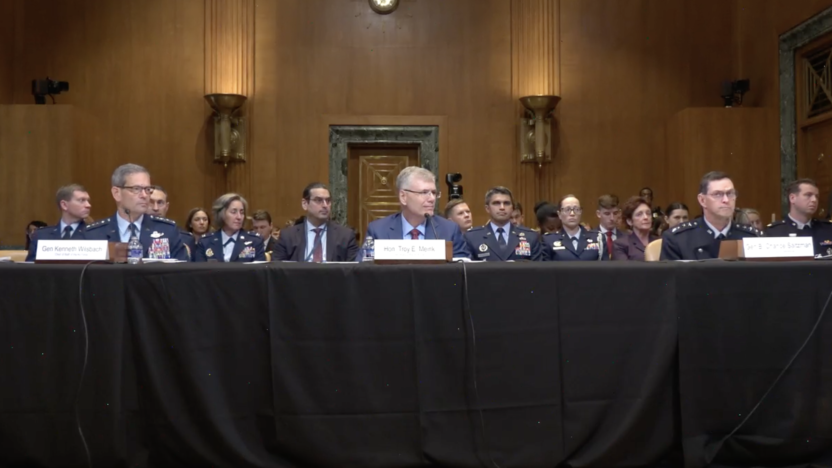
During a Senate appropriations hearing this week, Sen. Mitch McConnell, the Kentucky Republican who chairs the Senate Appropriations defense subcommittee, said it was “safe to conclude” there would not be another reconciliation bill. Sen. Susan Collins of Maine, chair of the Senate Appropriations Committee, said she agreed with that assessment.
While Republican leaders could still pursue another reconciliation package later this year, the comments underscore growing skepticism among appropriators about whether the additional funding will materialize.
The administration successfully used a similar strategy in fiscal 2026, securing roughly $150 billion in defense funding outside normal discretionary spending caps through reconciliation legislation. The fiscal 2027 proposal expands that approach significantly.
Among the programs most exposed is Golden Dome, the administration’s planned layered missile defense architecture. The program received about $21 billion through fiscal 2026 reconciliation funding and is seeking another $17.5 billion through reconciliation in fiscal 2027.
The House appropriations bill, however, provides just $397.9 million for Golden Dome, highlighting the gap between funding levels available through the annual appropriations process and those envisioned under the administration’s broader spending plans.
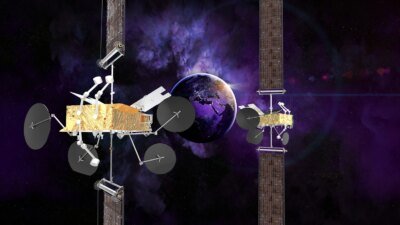
Another major initiative tied to reconciliation is the proposed Space Data Network, a large constellation of satellites in low Earth orbit designed to move data across military and commercial space systems. The Pentagon requested more than $3 billion for the effort in fiscal 2027 through reconciliation funding.
Despite excluding reconciliation spending, the House bill still represents a substantial increase for the Space Force.
The legislation includes $1.78 billion for military personnel, $8.8 billion for operations and maintenance, $9.6 billion for procurement and $35.3 billion for research, development, test and evaluation activities.
At $55.5 billion overall, the proposal would increase Space Force funding by nearly 80% from the roughly $31 billion enacted for fiscal 2026. Including the proposed reconciliation package, total Space Force funding would exceed $71 billion in fiscal 2027.
The House appropriations draft bill delivers another congressional rebuke to at least one Pentagon budget decision.
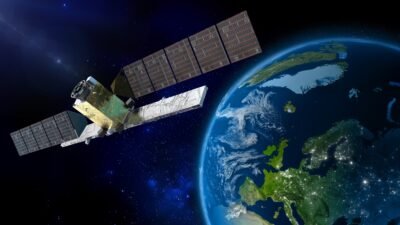
Appropriators included $200 million for the Next-Generation Overhead Persistent Infrared Polar satellite program, despite the administration’s proposal to terminate the effort in fiscal 2027. The program is intended to provide missile warning and missile tracking coverage over polar regions.
The funding addition follows action by the House Armed Services Committee, which authorized $415 million for the program last week in its markup of the fiscal 2027 National Defense Authorization Act.
The House defense appropriations subcommittee is scheduled to mark up the spending bill on June 11, with the full House Appropriations Committee expected to consider the measure on June 24.