
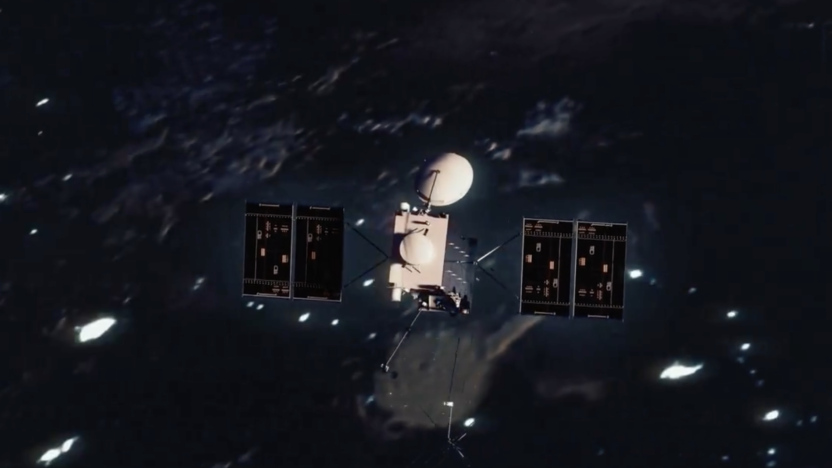
WASHINGTON — The U.S. Space Force has awarded Lockheed Martin a $514 million contract to build two additional GPS 3F satellites.
GPS 3F is the military’s next-generation navigation constellation designed to improve resilience against jamming and other electronic threats.
Lockheed Martin said June 15 the award covers GPS 3F satellites 23 and 24. The order brings the total number of GPS 3F spacecraft under contract to 14.
The satellites are part of the latest generation of Global Positioning System spacecraft, which provide positioning, navigation and timing services used by the U.S. military, civilian infrastructure and commercial users worldwide.
The award comes less than a year after the Space Force ordered GPS 3F satellites 21 and 22 for $509.7 million. Both procurements were issued under a 2018 contract that allows the Space Force to purchase as many as 22 satellites.
With the latest order, the Space Force has exercised options for 14 spacecraft under the contract, bringing its total value to approximately $4.6 billion.
The purchase follows the completion of the GPS 3 production run. In April, SpaceX launched the 10th and final GPS 3 satellite, marking the end of that phase of the constellation’s modernization. The next GPS launch is expected to be the first GPS 3F series.
Lockheed Martin manufactures GPS satellites at its facility in Denver, Colorado.
GPS 3F introduces several upgrades over the GPS 3 design. One is a feature known as Regional Military Protection, which allows satellites to concentrate the power of their encrypted military signal over specific geographic areas. The capability is intended to improve resistance to jamming and other forms of electronic interference in contested environments.
Like GPS 3 satellites, the GPS 3F vehicles will broadcast the military’s encrypted M-Code signal, which is designed to provide more secure positioning, navigation and timing services for military users than civilian GPS signals.
The new satellites also incorporate a fully digital navigation payload and will transmit the civilian L1C and L5 signals with improved accuracy and reliability, according to Lockheed Martin.
The GPS modernization effort comes as military planners place greater emphasis on protecting navigation and timing services from disruption. Jamming and spoofing of satellite navigation signals have become more common in recent conflicts, prompting the Pentagon to pursue both upgrades to GPS and investments in complementary positioning, navigation and timing technologies.