
WASHINGTON — Rocket Lab’s chief executive says the company’s acquisition of Iridium was the “logical next step” in his ambitions to tap into the lucrative space services market.
Rocket Lab announced June 29 it reached an agreement with Iridium to acquire the company for $54 per share in cash and stock, valuing Iridium at $8 billion. The deal is expected to close in mid-2027 after regulatory approvals.
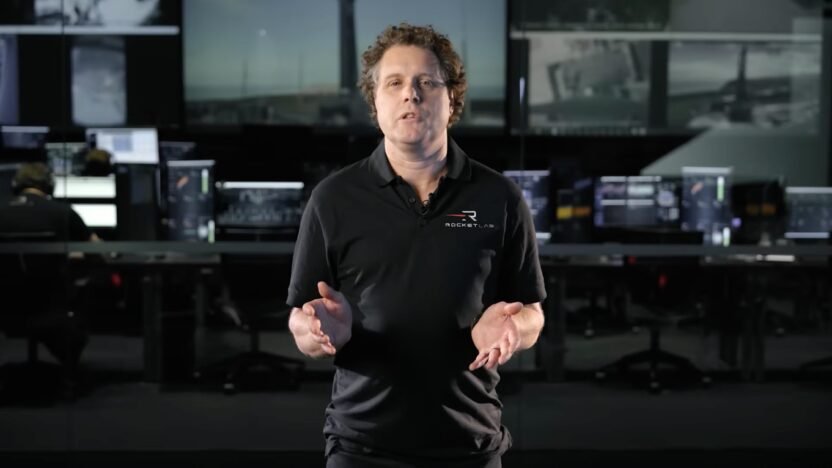
Peter Beck, Rocket Lab’s chief executive, said in an interview shortly after the announcement that services, such as the communications and navigation offerings from Iridium’s constellation, were the next step for his company, best known for launches and satellite manufacturing, and that buying Iridium was the best way to enter that market.
“You can spend many years building your satellites and launching your satellites, and it’s like a decade before you get firm recurring revenue,” he said. “We thought that an entrance into applications would likely be through an acquisition.”
He called Iridium “the typical Rocket Lab deal” because of the company’s positive cash flow. The company’s global L-band spectrum also made it ideal, keeping Rocket Lab from having to work with regulators on its own spectrum allocation.
“It was really the logical next step for us and very much like a typical Rocket Lab deal,” he said.
He did not go into details about how the deal came together but noted Rocket Lab had a “good relationship” with Iridium for years. That dates back to the early years of Rocket Lab when Iridium’s chief operating officer at the time, Scott Smith, sat on Rocket Lab’s board.
In a presentation announcing the acquisition, Beck said his company would “apply the Rocket Lab magic” to Iridium in terms of optimizing and scaling the company but did not elaborate.
In the interview, Beck said that the vertical integration achieved by having satellite production, launch and services in a single company would enable new applications beyond Iridium’s core capabilities.
“If you have your own rocket and you have your ability to build spacecraft at scale, then those things combined mean that you can go after business models that you would never have been able to go after before,” he said. “The service that they’ve created right now is amazing — it is absolutely life-critical for mariners, pilots and defense forces — but we also think there’s a lot of extra things that can be done on top of it.”
He didn’t elaborate on what those “extra things” might be. “Our goal here is to maintain the amazing service that they’ve created and, of course, leverage all the things that we have together to grow much larger,” he said.
Beck noted that Iridium’s second-generation constellation, Iridium NEXT, remains in good health, reducing any urgency to immediately replace it. “It gives us time to take our own view of it and scale the opportunity,” he said.
Buying Iridium, he added, would not affect Rocket Lab’s ongoing satellite manufacturing business, which includes producing satellites for Globalstar, an old rival of Iridium that is being acquired by Amazon.
“We really enjoy being the trusted merchant supplier,” he said. “We’ll continue to do that and we’ll continue to scale that.”
He said he looked forward to working with Iridium on new opportunities enabled by the acquisition. “We just had such a great time, our engineers and our leadership team sitting down with their team around a whiteboard, and I think we all just get super excited about the future.”