WASHINGTON — The Federal Aviation Administration is ready to begin collecting user fees for the first time for commercial launches and reentries, which could generate millions of dollars annually.
In an April 22 notice published in the Federal Register, the FAA’s Office of Commercial Space Transportation, or AST, announced its intent to start assessing user fees for launches and reentries that it licenses.
A provision of last year’s budget reconciliation bill directed the FAA to charge fees based on the mass of the payload. For 2026, that fee is 25 cents per pound of payload, capped at $30,000 per launch or reentry. The fees would fund work on improving integration of launches and reentries into the national airspace system directed by an FAA reauthorization act in 2024.
In its notice, the FAA said it would begin incorporating terms and conditions for collecting the fees in future licenses and experimental permits it issues. Operators with existing licenses will still be liable for the fees, including those incurred for launches since the beginning of the calendar year.
Under existing regulations, companies planning commercial launches and reentries must supply information that includes the weight of the payload at least 60 days before the mission. The FAA will use that information to calculate the fee, issuing a fee notification to the operator, who will then have 30 days to pay the fee. The notice does not discuss what would happen if the operator failed to pay the fee on time.
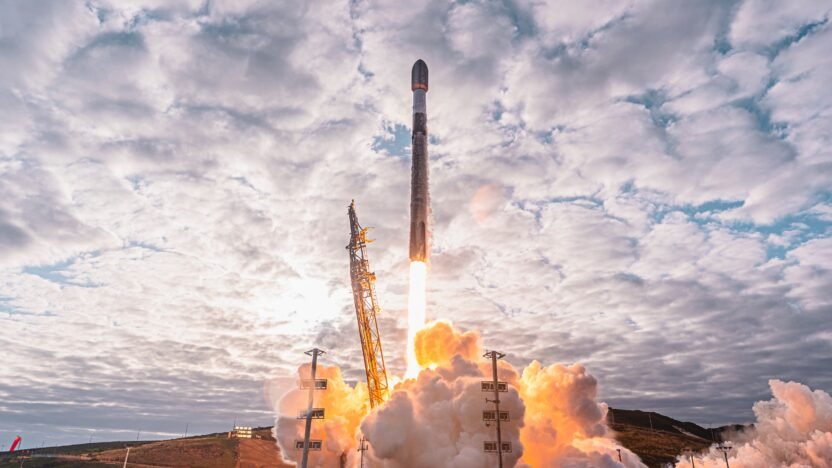
The individual fee for a launch or reentry would be a small fraction of the overall cost of the mission, but the growth in commercial launch activity could result in significant revenue for AST. There were 199 licensed launches and seven licensed reentries in 2025, according to FAA data.
That launch activity was dominated by SpaceX, and most of its launches were of Starlink satellites. While payload mass data is not publicly disclosed by SpaceX or the FAA, each Starlink launch typically carries 25 to 29 satellites, with a total mass estimated to be between 14,400 and 16,700 kilograms. That would work out to per-launch fees of between about $8,000 and $9,200 per launch, or on the order of $1 million a year from Starlink launches alone.
Those fees will increase over time. The budget reconciliation act escalates the fees annually, reaching $1.50 per pound of payload, capped at $200,000 per mission, by 2033. Growth in fees beyond 2033 would be linked to the Consumer Price Index.
That could result in significant revenue for the office in the future, given projections of growth in both the number of launches as well as the size of payloads, as heavy-lift vehicles like Starship and New Glenn enter regular service.
The new fees come as the FAA proposed a major increase in the budget for AST. The office received $39.646 million in fiscal year 2026, a 5.6% decrease from the $42.019 million it received in 2025 despite growing commercial launch activity.
The FAA’s 2027 budget, released earlier this month, proposes a 43.3% increase for AST, to $56.844 million. Much of that would be used to hire additional staff, going from 136 to 206 positions.
“Since FY 2023, commercial space launch and re-entry demands have surged by 52.7 percent, while AST’s staffing levels have remained unchanged,” the FAA stated in the budget. “To keep pace with demand and support the transition to performance-based licensing, AST requires additional funding.”
The FAA said it would use $10 million of the increase for “highly specialized technical expertise” for license evaluations along with training for personnel and work on automation approaches. The remainder would go toward hiring engineers and analysts for license evaluations.
Minh Nguyen, deputy associate administrator for commercial space transportation at the FAA, did not discuss the budget proposal or user fees in an appearance at the 41st Space Symposium earlier this month. However, he said that his office was working to keep up with growing launch demand.
He noted that, last August, the FAA passed the milestone of 1,000 operations — launches and reentries — licensed by the agency since 1989. “What we’re looking at into the future is, in another three to four years, we’re going to get up to another 1,000 launches and reentries,” he said.
He said that growth was enabled by AST’s “very dedicated and talented workforce” as well as efforts to incorporate automation into the licensing process. “We listen to the industry to hear what the pain points are, and we go back in terms of improving our processes and efficiency within our office,” he said.
Nguyen called on industry to take its own steps to help improve the licensing process by submitting “good and quality” applications that take less time for AST to review. He also said companies should take advantage of elements of the new Part 450 licensing regulations that enable multiple missions to be flown under a single license.
The FAA completed the transition to Part 450 licenses in March, five years after the new regulations took effect. “It was a lot of hard work, a lot of time and dedication being put in to transition operators with legacy licenses to the new Part 450 licenses,” he said. There are now 11 launch licenses and three reentry licenses under Part 450.