
WASHINGTON — The U.S. Space Force has earned a reputation inside the Pentagon for moving faster than traditional military acquisition programs. But a new government watchdog report suggests some space procurements continue to confront many of the same problems that have plagued defense acquisitions for decades.
The Government Accountability Office’s annual assessment of major defense acquisition programs, released July 2, found the Space Force making progress on several high-profile satellite efforts while continuing to wrestle with slow development timelines, cost growth and workforce shortages that threaten the pace of future national security launches.
The report’s broader conclusion extends beyond space: despite years of acquisition reforms and the introduction of rapid procurement pathways, the Pentagon is still taking too long to field major weapon systems because programs often begin development with immature technologies and continue to rely on outdated acquisition practices.
GAO reviewed more than 100 of the Defense Department’s largest acquisition programs, including 13 Space Force procurements spanning missile-warning satellites, military satellite communications, national security launch and the Space Development Agency’s proliferated low Earth orbit constellation. The agency noted that the Pentagon has embraced digital engineering in principle more than in practice. Across multiple programs, GAO found digital twins remain largely absent, digital threads only partially implemented and other modern engineering practices insufficiently adopted to support rapid acquisition.
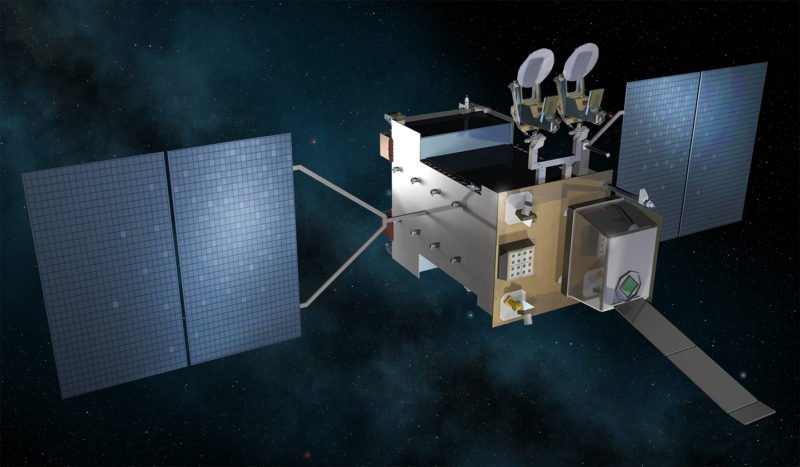
Among the programs drawing the sharpest scrutiny was the Next Generation Overhead Persistent Infrared geosynchronous missile-warning constellation, or Next Gen OPIR GEO, a replacement for the aging Space Based Infrared System. The two geosynchronous satellites, built by Lockheed Martin, are designed to provide early warning of ballistic missile attacks against the United States, deployed forces and allies.
GAO estimated the program’s acquisition cost at $9.5 billion and said it “continues to progress but has experienced significant cost growth.” The report attributes a roughly $340 million overrun by the mission payload subcontractor to software development complexity and engineering challenges.
The first Next Gen OPIR GEO satellite was completed in January, but its launch schedule remains uncertain because it was assigned to United Launch Alliance’s Vulcan rocket, which remains grounded following a launch anomaly. Vulcan is expected to return to flight later this year.
Other programs assessed
GAO also assessed the companion Next Gen OPIR Polar constellation, a Northrop Grumman program intended to detect intercontinental ballistic missiles, submarine-launched ballistic missiles and tactical missile launches from highly elliptical polar orbits. The watchdog estimated the program’s cost at $5.9 billion and said the first satellite is expected to launch in 2028.
The future of the polar program, however, has become a budget fight. The Trump administration’s fiscal 2027 budget proposal eliminated funding, signaling an intent to terminate the effort, but House and Senate appropriators have restored money for the program, preserving it for now.
Another closely watched satellite program, the Protected Tactical Satcom-Global, illustrates the Space Force’s broader push toward commercially derived military communications. Rather than immediately buying four production satellites as originally envisioned, the service opted to procure two spacecraft — one each from SES and Viasat — and continue to evaluate designs. GAO estimates the program will cost $2.9 billion for a planned constellation of 24 satellites but warned that integrating commercial technologies onto military systems could create interface and integration problems that increase costs or delay schedules.
The report also provides additional insight into one of the Space Force’s most troubled acquisition failures. GAO disclosed that Pentagon leaders decided in late 2025 to cancel the Next Generation Operational Control System, or OCX, months before the decision became public in April 2026. OCX, developed by Raytheon, was intended to replace the aging ground system that controls the GPS constellation but became synonymous with years of software delays, cost overruns and repeated schedule slips.
According to GAO, “in late 2025, the Air Force acquisition executive recommended that the OCX program be canceled and that Space Force pursue modernization of the existing GPS Operational Control Segment (OCS) to meet the requirements that were to be delivered by OCX.”
GAO also warned that the Space Force’s launch enterprise faces pressures extending beyond rocket availability. The National Security Space Launch program is preparing for a sharp increase in launch activity while simultaneously coping with reductions in its government workforce.
The challenge comes as the military’s launch options have narrowed. Vulcan remains grounded, and Blue Origin’s recent New Glenn launch failure is expected to delay certification for national security missions, leaving SpaceX and ULA as the only providers currently certified to conduct such launches.
“The NSSL program plans to significantly increase the number of launches over the coming years, at a time when the program faces workforce reductions,” GAO wrote. The report said approximately 50 Phase 2 missions are expected through fiscal 2028, while the Space Force plans to acquire launch services for roughly 85 Phase 3 missions. Yet recent staff departures under the federal deferred resignation program, voluntary early retirements and a hiring freeze are reducing the engineering and oversight workforce responsible for launch certification and mission assurance. GAO warned those vacancies “may have long-term detrimental effects on the program” by slowing the onboarding of additional launch providers needed to meet future Defense Department demand.