For anyone who wasn’t sure whether China was in it to win the space race and dominate the rapidly growing space economy, its filings in December for 200,000 more satellites should dispel all doubts. Beijing is seeking to position itself as a leader in low Earth orbit satellite constellations, electronic warfare and the space race more broadly. But the next battleground in this race is a regulatory conference, not the launchpad.
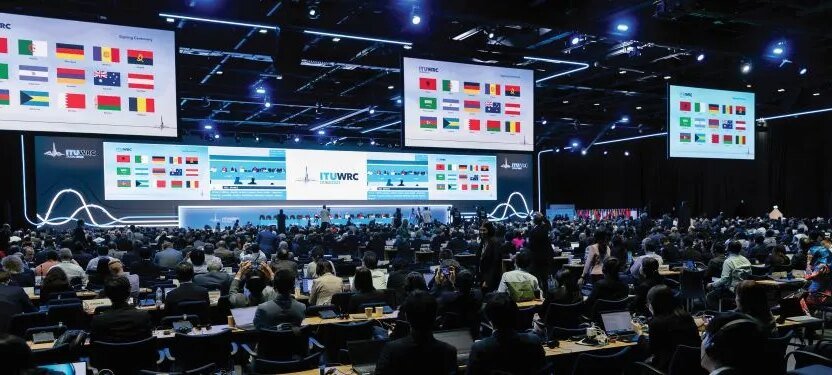
In late 2027, global regulators will gather in Shanghai for the International Telecommunication Union’s 2027 World Radiocommunication Conference (WRC-27), where about 80% of the agenda addresses space and satellite issues. The results will have profound effects that extend beyond the space economy and space exploration to national security, political influence and the future balance of power.
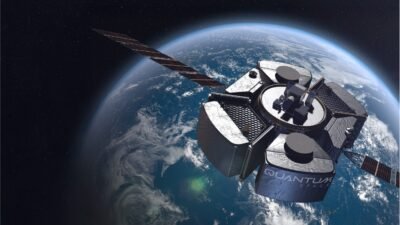
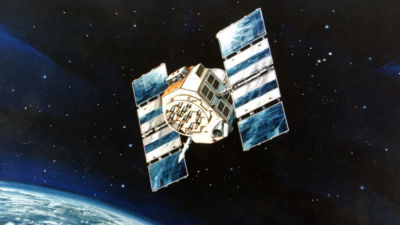
The competition to establish low Earth, also known as non-geostationary orbit (NGSO) satellite constellations is particularly fierce and growing more intense. In sheer numbers, the United States currently has an advantage based on Starlink’s constellation of more than 10,000 satellites. Other companies, notably Amazon and AST Space Mobile, are well underway in launching constellations of their own. And more are coming. However, China is not that far behind, rapidly scaling its national champions, Guowang and Qianfan. If America wants to maintain its leadership, government and industry players must act now to make success at WRC-27 a strategic priority for advancing the United States’ broader space and technology strategy.
Several key issues at the conference will carry significant consequences for to U.S. space competitiveness, including:
Direct-to-device spectrum: Transmission direct from satellites to mobile devices is a rapidly expanding service. The conference will not only consider spectrum allocations for such transmissions but also technical and operational issues, including the potential for spectrum sharing, that could have a significant regulatory impact. Here in the U.S., the Federal Communications Commission is leading the way for the rest of the world with a new regulatory framework for what is called supplemental coverage from space, enabling satellite networks to connect directly with wireless networks. Getting others to adopt the FCC’s approach will be important for U.S. leadership, as well as for bridging the digital divide in areas that currently lack connectivity.
New spectrum allocations in space: WRC-27 will include seven separate agenda items that address spectrum allocation for communications in space. These include frequencies for communications between satellites as well as communications on the surface of the moon and in its orbit. Such allocations will be essential to enabling the U.S.-led international Artemis program while China and others pursue their own lunar ambitions.
“Unauthorized” services: Another agenda item at WRC-27 will address so-called “unauthorized” services by NGSO satellite systems. The goal of this item, which is plainly directed at U.S. companies and has been championed by Iran and other authoritarian countries, is to force NGSO satellite systems to turn off their transmissions over countries that have not authorized them to operate. This would be a radical departure from the existing international system and make it difficult for NGSO systems to operate in many places on the globe. The Iranian and like-minded regimes seek to use this agenda item to extend censorship into space and slow the growth of U.S. NGSO constellations.
Power levels for NGSO satellites: Regulators may also revisit power restrictions — called electronic power flux density (EPFD) levels — for NGSO satellites. The current limits protect geostationary orbit satellite transmissions from interference from NGSO constellations in lower orbits. But the U.S. has agreed with NGSO operators, who argue that the limits, which were developed more than 20 years ago, are unnecessarily restrictive and prevent efficient use of spectrum resources. The FCC is ahead of the game here as well. On April 30, it voted to update U.S. rules to focus on actual interference rather than arbitrary power levels. In accordance with instructions from WRC-23, the ITU is producing studies on this topic for WRC-27. As this topic is not on the formal agenda for WRC-27, and only discussion of the technical results is mandated at WRC-27, this makes FCC leadership on this topic and U.S. government engagement with foreign partners even more necessary.
Each of these WRC-27 issues is crucial to the future of America’s competitiveness in space. This is why the U.S. government and industry need to work together to demonstrate strong leadership at the conference and prioritize issues with a unified voice that will strengthen the U.S. lead in critical technologies. They must act now to finalize studies and positions that are data driven and protect incumbent services while maximizing spectrum efficiency and enabling new technologies.
In addition, the FCC should also accelerate its own regulatory steps in these areas, especially on EPFD levels. The State Department should work with the FCC and other U.S. agencies to promote these approaches internationally with partners and middle-ground states in a comprehensive, global diplomatic strategy that begins immediately. It should include an international spectrum summit hosted in the United States to coordinate a meeting with partners in advance of the conference.
WRC-27 may seem like a long way off, but now is the time to redouble sustained and energetic global engagement. If the U.S. fails to lead in setting the rules in space, others will write them — and they will do so in ways that kneecap American leadership.
Ambassador (ret.) Stephan Lang is a veteran diplomat and international tech policy leader, who served as U.S. Coordinator for International Communications and Information Policy at the Department of State. He is currently a Senior Advisor with Crest Hill Advisors, whose clients include NGSO satellite operators.
SpaceNews is committed to publishing our community’s diverse perspectives. Whether you’re an academic, executive, engineer or even just a concerned citizen of the cosmos, send your arguments and viewpoints to opinion (at) spacenews.com to be considered for publication online or in our next magazine. If you have something to submit, read some of our recent opinion articles and our submission guidelines to get a sense of what we’re looking for. The perspectives shared in these opinion articles are solely those of the authors and do not necessarily represent their employers or professional affiliations.