Across the European Union, satellite navigations alone is thought to underpin more than 10% of GDP. Satellite-dependent activity on the whole is responsible for much more. According to INSEE and CNES, France’s space sector generated 10.8 billions euros ($12.3 billion) bn in space-related turnover and supported 33,200 dedicated space jobs in 2020. As of 2025 in the United Kingdom, space-based activity is behind about 18% of GDP. It doesn’t take too much imagination, therefore, to picture the chaos that might ensue should a strategically crucial European satellite or group of satellites be harmed. Space systems form the enabling network of much of modern life.
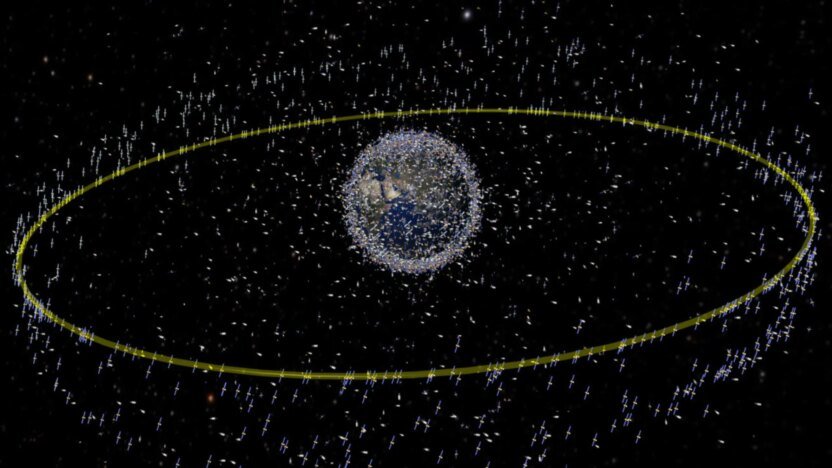
It follows that these systems can’t be left unguarded. They’re too important; and therefore make far too inviting targets for our adversaries who, according to analysts and insiders, are already tracking them closely. Protecting them starts with our being able to see exactly what is happening around them, which points to the crucial role that Space Situational Awareness (SSA) has to play. This, a field of significant growth (spending is set to hit $61 billion over the next decade), is vitally necessary if governments and defence agencies are to overcome the so-called problem of attribution and develop the ability to distinguish between hostile activity and an accident. Orbit remains a shared domain with mainly voluntary traffic coordination, which makes working out why a satellite failed or who might be behind a crash is an obstacle.
Russia, among others, has taken full advantage of this phenomenon, pursuing against Europe the kind of grey-zone aggression which falls below the threshold that would trigger open war. SSA represents a powerful deterrent, for us in Europe as for our friends in the United States. It bears remembering that China is fast developing the infrastructure needed for it to become a military space superpower — notably, with their low Earth orbit megaconstellation Guowang. The country has asked the International Telecommunications Union if it can put nearly 13,000 satellites into orbit, which is some 1,000 more than what has so far been authorized for Starlink.
Europe says, as it has said for some time, that it is striving for strategic autonomy. Now is the time to obtain it. Europe is the second largest contributor to the global SSA market with a share of 27.7% behind the US with a share of 42.4% according to the Insight Partner’s Analysis. The German market is estimated at $60 million followed by France’s $40 million in 2025. Europe is focusing on strengthening strategic autonomy in space, which points to the need to develop space-based SSA (SB-SSA) technologies and infrastructure. This is encouraging: SB-SSA must be seen as a strategic priority across Europe, including beyond the European Union, if we wish to be autonomous. We cannot defend ourselves against what we cannot see, and we cannot hope to plan sensibly for space defence if we are unsure, exactly, of the threats we face in orbit.
In Europe and the wider West, we have some of the world’s finest universities and institutions of research and higher learning, as well as talented engineers developing the optical technology of tomorrow. These cameras can spot an object just centimetres in diameter from up to 10 kilometers away. Europe must prioritise SSA by getting sustained and generous funding to manufacturers and innovators and reforming procurement so that the best companies, not just the most familiar ones, can compete for contracts. It must also support continuous, secure, specifically space-based asset monitoring, which has many meaningful tactical and technical advantages over its ground-based counterpart. It is less exposed; it can observe and track objects at every orbital level; it is extra-territorial. Some market reports predict a major rise in the use of SB-SSA for Space Surveillance and Tracking and Space Domain Awareness in the coming years. In 2025, space-based optical imaging (including visible, multispectral and hyperspectral) payloads counted the highest market share with 35% of the total market valued at $658 million among all other sensors, including infrared, ground-based space surveillance telescope and star trackers.
Practically speaking, we need European governments to end the habit of backing national champions and using the past to predict the future. Faced with the strength of the U.S. and China, it is likely that the EU defence sector and the governments of the EU will find a way to collaborate and share capacity in order to gain strategic autonomy, but more efficient procurement reform is badly needed so that agile, creative small and medium-sized companies can innovate, scale and get their products to those who need them. More operational or project-based collaboration between the defense and private sectors will support the space-defence ecosystem on the whole. And the result should be that cameras, sensors and software are procured quickly and joined together — before some crisis exposes our weakness.
Kammy Brun is managing director of Simera Sense France.
SpaceNews is committed to publishing our community’s diverse perspectives. Whether you’re an academic, executive, engineer or even just a concerned citizen of the cosmos, send your arguments and viewpoints to opinion (at) spacenews.com to be considered for publication online or in our next magazine. If you have something to submit, read some of our recent opinion articles and our submission guidelines to get a sense of what we’re looking for. The perspectives shared in these opinion articles are solely those of the authors and do not necessarily represent their employers or professional affiliations.