Less than 50 years after the Wright brothers took to the air in 1903, the De Havilland Comet became the world’s first commercial jet airliner, with the British Overseas Airways Corporation conducting a flight from London to Johannesburg, South Africa, on May 2, 1952. Later that decade, the Boeing 707, the Douglas DC-8, and similar aircraft were put into service. Although there have certainly been significant advancements since that time in aircraft safety, noise levels and fuel economy, the cruising speed of commercial airliners today, roughly 70 years later, has basically remained about the same, or even slightly decreased.
Given the recent advent of reusable launch vehicles, breakthrough developments in propulsion and additive manufacturing, rapid advances in artificial intelligence and continuing innovation by industry, we now have the opportunity to bring about dramatic changes in long-distance, high-speed aerospace transportation, both for people and for cargo. Surprisingly, that mission, sometimes referred to as suborbital point-to-point transportation through space, does not appear to be getting much attention from government or industry leaders. But having the ability to fly from one point on Earth to the opposite side of the planet in just an hour or two will be a major game changer for both national security and economic competitiveness. And U.S. leadership in developing and implementing such a capability will be imperative.
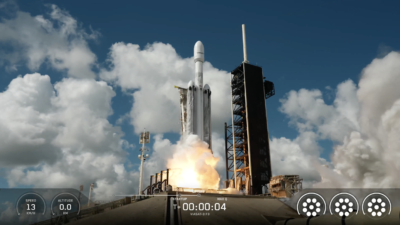
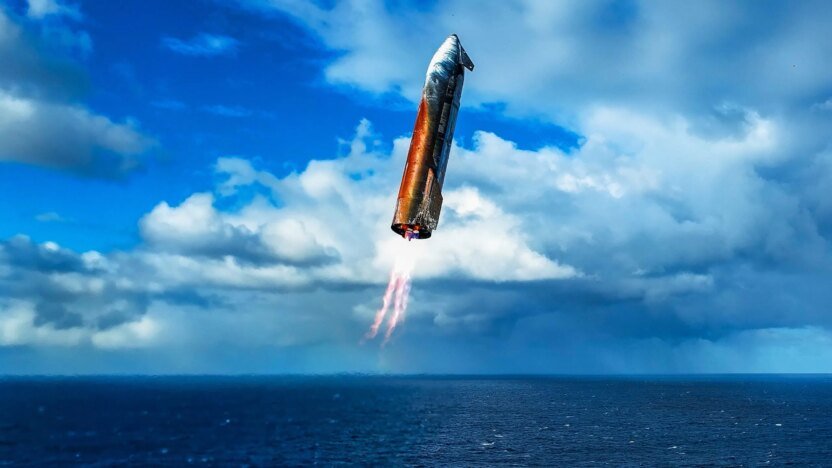
One example of the kind of vehicle that may make a difference is the SpaceX Starship. Even though SpaceX CEO Elon Musk originally envisioned the Starship as a way to travel to Mars and enable humanity to become a multi-planetary species, or to take NASA astronauts down to the lunar surface and back as part of the Artemis program, that same system would also have the ability to carry several hundred passengers or more than 100 metric tons of cargo on point-to-point missions, with flight times ranging from 30 minutes to an hour.
Potential customers could include:
- Military and other national security organizations
- Businesses needing rapid delivery of their products
- Shipping, package delivery, and logistics companies
- Government agencies and other groups involved in disaster relief, humanitarian crisis response and medical emergencies
- Business travelers
- Long-distance travelers from the general public
Because Starship is such a large vehicle, it may not be practical for operations near densely populated areas. But there are at least a dozen other companies, both in the U.S. and in other countries, that are designing, developing and testing smaller systems that are intended to meet the need for long-distance, high-speed transportation. Some of those systems are designed to take off and land horizontally, and could use runways at existing spaceports, airports or military bases. Others are designed for vertical launch and landing, operating either from coastal or inland facilities, or from offshore platforms.
Successful systems will need to address three challenges:
- The technical and logistical risks related to reusability and rapid-turnaround operations
- The regulatory uncertainty caused by differences between how aircraft and launch vehicles are approved for flight
- The lack of demonstrated market demand (as opposed to data from market surveys)
To overcome these challenges and position the U.S. to become the leader in suborbital point-to-point transportation through space will require bold decisions and timely action across government, industry, academia and the venture capital community. Specifically:
The U.S. should develop and implement a comprehensive, multi-faceted, “whole of nation” initiative focused on Global Rapid Transport. The overall objective would be to enable commercial suborbital and/or hypersonic cargo operations within five years and passenger operations within 10 years.
Executive Branch actions
An excellent way to communicate the importance and urgency of this initiative would be for the White House to issue an Executive Order declaring “Global Rapid Transport” as a national priority. He could also establish an Interagency Task Force, led by the Office of Science and Technology Policy, to oversee the effort. Members would include the Federal Aviation Administration (FAA), the Department of Transportation, the Department of Commerce, the Department of Defense, the Department of State, and NASA. Finally, he could call for updates of the National Space Policy and the National Space Transportation Policy so that they reflect the importance of U.S. leadership in long-distance, high-speed aerospace transportation.
Congressional actions
Congress would be responsible for passing the necessary legislation, specially what we refer to as “The Global Rapid Transport Acceleration Act,” and to provide the funding to implement the act’s provisions. Key hardware provisions include a National X-Plane Program, a Global Rapid Transport Prize, and a Point-to Point Commercial Services Program. The act would also implement a number of policy and regulatory actions.
In collaboration with NASA and the Space Force, DARPA would stand up a National X-Plane Program for reusable hypersonic and suborbital vehicles. The objective would be to demonstrate rapid turnaround, high-speed operations and reliability and maintainability. The Department of Transportation would create a Global Rapid Transport Prize for repeatable, long-distance, high-speed cargo delivery. The prize would be administered through an experienced nonprofit entity like the XPRIZE Foundation. The goal would be to attract new entrants and accelerate innovation and flight demonstrations. Building on its recent successes in creating commercial markets, NASA would establish a high-speed Point-to-Point Commercial Services Program using public-private partnerships and modeled on the Commercial Orbital Transportation Services, Commercial Resupply Services, and Commercial Crew Program efforts. The goal would be to de-risk private investment and enable a viable commercial market.
On the regulatory front, the FAA would be tasked with modernizing the current framework by creating a new “High-Speed Global Transport Vehicle” category. This would simplify the existing regulatory structure and minimize confusion over whether high-speed, high-altitude vehicles are aircraft or launch vehicles. The FAA would also establish pre-approved flight corridors for vehicles involved in high-speed point-to-point transportation and outline a pathway towards passenger certification, consistent with public safety. Finally, the FAA would define a process to apply for funding in support of dual-use Airport/Spaceport infrastructure projects.
To facilitate the needed economic development, the Department of Commerce would oversee the National Institute of Standards and Technology in working with industry and standards development organizations to develop widely accepted industry consensus standards that would minimize the regulatory burden on the high-speed aerospace transportation industry during global operations. The Department would also direct the U.S. Economic Development Administration to encourage private capital investment in the high-speed global transport industry through federal tax incentives and loan guarantees.
Because successful commercial operations will require enhanced international engagement and coordination, the Department of State would be directed to negotiate bilateral agreements that would facilitate licensing reciprocity and support the timely approval of international flights involving high-speed global transport vehicles. The Department would also engage with the United Nations Committee on the Peaceful Uses of Outer Space, the United Nations Office of Outer Space Affairs, and the International Civil Aviation Organization to harmonize standards and enable global routes for the high-speed global transport industry.
Implementation Timeline: With the adoption of the steps described here, the overall schedule could be significantly shorter than typical aerospace projects. The first two years would consist of program initiation, rulemaking, early ground and flight tests and demonstrations, and potentially even some prize awards. Years 3 to 5 could see the first commercial cargo operations. Passenger operations and global network expansion would take place during years 6 to 10.
Cost and Impact: Although the overall cost of this initiative could be on the order of $100 billion over 10 years, the U.S. government share would be approximately $20-30 billion over the same period. That would leave industry with the need to raise $70-80 billion over a 10-year time frame. If successful, the end result would be the creation of a $20-50 billion per year industry. There would also be a major strategic benefit: ensuring U.S. leadership in high-speed aerospace transportation operations and delivering a transformational capability in global supply chains and logistics.
With targeted investment and regulatory reform, the United States has the opportunity to catalyze a new global transportation capability — delivering transformative economic and strategic benefits within a decade. Now is the time for action!
George C. Nield is the president of Commercial Space Technologies, LLC, and chairman of the Global Spaceport Alliance. He served as the FAA Associate Administrator for commercial space transportation from 2008-2018.
Oscar S. Garcia is the executive chairman and CEO of Interflight Global Corporation and chairman of the High-Speed Flight (HSF) Group, focused on enabling high-speed aerospace transportation and spaceport-to-spaceport transportation.
SpaceNews is committed to publishing our community’s diverse perspectives. Whether you’re an academic, executive, engineer or even just a concerned citizen of the cosmos, send your arguments and viewpoints to opinion (at) spacenews.com to be considered for publication online or in our next magazine. If you have something to submit, read some of our recent opinion articles and our submission guidelines to get a sense of what we’re looking for. The perspectives shared in these opinion articles are solely those of the authors and do not necessarily represent their employers or professional affiliations.