
This week’s science news was filled with things missing and found, with the revelation of the first-ever deep-sea footage of the elusive goblin shark making waves in the press.
Goblin sharks (Mitsukurina owstoni) are mysterious, deepwater creatures that have not changed much since they first appeared on Earth 125 million years ago — making them “living fossils.” But capturing a recording of the sharks in their deep habitats is exceptionally difficult, and they have previously been seen alive only after being hooked to the surface on fishing lines. Scientists recently filmed not one, but two goblin sharks: The first near Jarvis Island in the South Central Pacific, and the second 6,550 feet (1,997 meters) deep in the Tonga Trench.
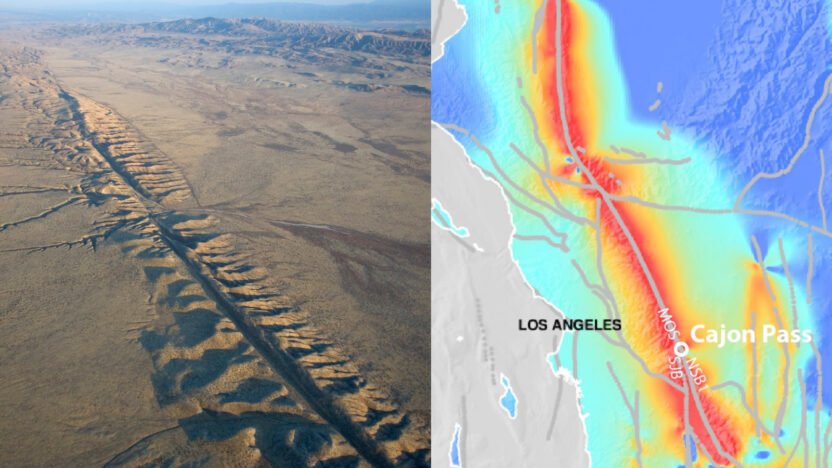
California is scarily close to a major quake

Life’s Little Mysteries

Why does it always take up to an hour for our eyes to adjust to our surroundings if we’re out in nature on a dark night?
(Image credit: Jackal Pan via Getty Images)
Physicists split a photon

Physicists are studying what would happen if a single particle of light was sliced apart — unleashing a swarm of unpredictable outcomes.
(Image credit: tiero via Getty Images)
Also in science news this week
Science Spotlight

A cloud-seeding rocket is launched into the sky in Hebei Province in an attempt to generate precipitation.
(Image credit: VCG via Getty Images)
Something for the weekend
Science video of the week

Follow Live Science on social media
TOPICS