WASHINGTON — Four NASA exploration projects that the agency stopped earlier this year as part of changes to its Artemis lunar exploration campaign had suffered overruns that saw their costs more than double, with more than $1 billion in additional increases expected.
In a June 24 memo, NASA’s Office of Inspector General, or OIG, offered its initial assessment of the projects as part of an ongoing audit, linked to NASA’s decision earlier this year to end development of the Space Launch System’s Block 1B variant and the lunar Gateway.
Three of the projects are linked to the SLS Block 1B: the Exploration Upper Stage, or EUS; Universal Stage Adapter, or USA; and Mobile Launcher 2. The fourth is the Habitation and Logistics Outpost, or HALO, module for the Gateway.
“Over the course of their life cycles, the combined contract values for these efforts ballooned from nearly $2.8 billion to $5.9 billion, and NASA extended their contracted delivery dates by up to 7 years,” the memo concluded. “However, our projections indicate that if NASA allowed work to continue to completion, the systems would have cost more and taken longer than what was on contract.”
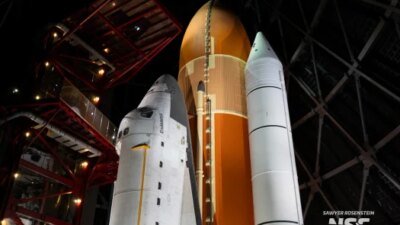
For EUS, NASA originally allocated $962 million to Boeing to build the more powerful upper stage as part of the company’s existing SLS contract. By March, that cost estimate had grown to $2.9 billion, with OIG projecting that cost would likely have grown to $3.7 billion. Completion of the stage slipped from March 2021 to no earlier than August 2028.
USA, an adapter designed to connect the Orion spacecraft to the EUS, was being built by Dynetics (now part of Leidos) under a contract awarded in 2017 valued at $131 million, with the first adapter to be completed by August 2021. That cost nearly tripled to $353 million, with a delivery date of September 2028, although OIG projected the cost to grow further to $497 million, with a May 2030 delivery date.
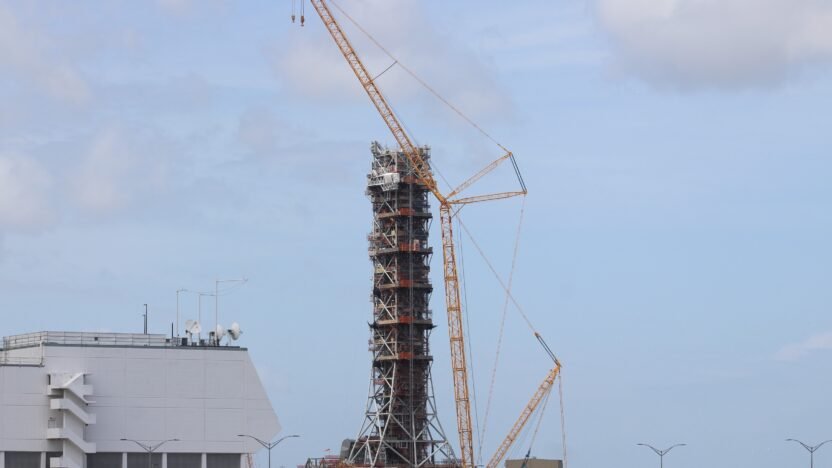
Mobile Launcher 2, whose cost growth had been tracked by OIG for years, had seen its cost grow from $383 million when Bechtel won the contract in 2019 to $1.6 billion when NASA issued a stop-work order earlier this year. The report projected the cost could grow to $2 billion by the time the platform was completed at the end of 2026, although that was actually less than some earlier estimates by OIG that projected the cost to reach as high as $2.5 billion.
NASA awarded Northrop Grumman a fixed-price contract worth $1.3 billion to develop HALO in 2021 but converted it to a cost-plus contract in 2024 because of what the agency said were difficulties working on a development project under a fixed-price award. OIG said those costs had increased to $1.9 billion when NASA issued a stop-work order for the contract in April.
The report noted that while HALO was officially scheduled to be completed in October, NASA officials said the agency “lacks confidence” in Northrop’s schedule, with OIG estimating that HALO would not have been ready until 2031. The report did not estimate how much more the module would have cost, citing limited cost reports.
NASA officials, while accepting the report’s findings, sought to distance the agency’s revised Artemis plans from the cost and schedule delays of the canceled projects.
“While the OIG’s projections indicate that continuing these systems would likely increase total lifecycle cost, NASA stresses that these projections rely on past performance under outdated architectural assumptions that do not reflect the Ignition Day principles of discipline, affordability, simplification, and speed,” said Lori Glaze, associate administrator for exploration, referring to the March 24 Ignition event where NASA rolled out many of its planned changes to Artemis.
Glaze, in a letter included in the OIG memo, acknowledged that some of the overruns were linked to shifting agency requirements. “NASA is enhancing internal controls to lock requirements earlier in the development cycle and applying lessons learned to drive future procurements toward firm-fixed-price structures where practicable and to leverage commercial offerings,” she wrote.
“We are doing things differently now. NASA cannot take years longer than expected and spend billions more than planned when the world is waiting for the headlines only NASA can deliver,” NASA Administrator Jared Isaacman said in a social media post responding to the OIG memo. “The programs covered in the report will free up more than $3 billion in the years ahead for more missions of science and discovery.”