WASHINGTON — NASA is withdrawing a proposal to revamp its strategy for transitioning from the International Space Station to commercial stations, one that had been sharply criticized by the companies developing such stations.
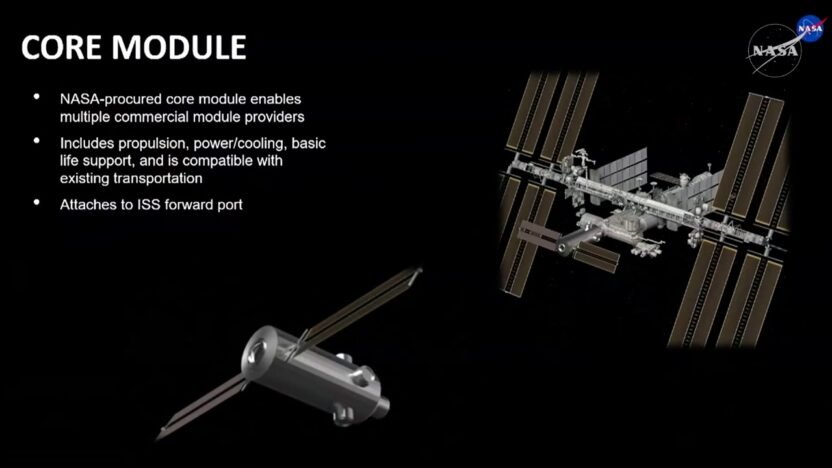
In a June 1 statement, NASA press secretary Bethany Stevens said the agency was effectively abandoning a proposal to develop a new “core module” for the ISS that commercial modules could attach to.
NASA floated the proposal at its Ignition event in March, arguing that the market for commercial space stations had not developed as NASA had anticipated. The government-owned core module, the agency argued, could provide a bridge to standalone commercial stations.
“Though we have seen investor interest, there’s no independently verifiable market research indicating the economic viability of a commercial station that is only partially funded by NASA,” Dana Weigel, NASA ISS program manager, said at Ignition.
NASA issued a request for information seeking industry input on the core module concept along with the existing strategy to support development of stations through funded Space Act Agreements and contracts to purchase services from those stations. Industry officials made clear in interviews and public appearances that they used the RFI to express their opposition to the core module proposal.
“It was a surprise,” said Jonathan Cirtain, chief executive of Axiom Space, of the proposed core module in an onstage interview at the ASCEND conference May 19. “Adding that government-owned component wasn’t all that well received, at least by us.”
He and others argued that there was a market big enough to support one or more commercial stations when combining NASA and the other Western ISS partners, along with other national governments and the small but growing commercial interest in stations in areas like microgravity research and manufacturing.
“The PAM missions have proven that more and more nations that are not involved in the ISS are willing to fly astronauts,” said Max Haot, chief executive of Vast, in another ASCEND session, referring to private astronaut missions to the ISS. “The market is sovereign governments, and it’s a growing market.”
Marshall Smith, chief executive of Starlab Space, noted on the same panel that his company had turned in hundreds of pages of reports and analyses as part of its response to the RFI, making its case that there was a market for commercial stations. “I think that the market is there,” he said, a conclusion also based on customers the company has signed up for its station. “We’re 140% oversold for commercial space.”
Industry was also skeptical that a government-owned core module could be built quickly, extending the life of the ISS well into the 2030s.
“A government-owned module really means ISS 2.0,” Haot said. “We’re definitely manifesting that reason will prevail.”
Those companies’ arguments appeared to convince NASA. “Industry has provided extensive feedback making the case for a sustainable commercial market in which NASA is one customer among many, along with assurances regarding available transportation capabilities,” Stevens stated. “The industry position will now shape the path forward as NASA proceeds with the original commercial strategy.”
She said that NASA will work with companies “to refine flexible requirements and acquisition plans” with the goal of releasing a draft request for proposals later in the month.
Haot was among those who welcomed the announcement. “Thank you, @NASAAdmin, for the collaborative dialogue and for giving the commercial space station industry the opportunity to compete for NASA’s business and win the privilege of building the ISS successor for the U.S. and our allies,” he said in a June 1 social media post.