
WASHINGTON — The Congressional Budget Office estimates that a national missile defense system broadly aligned with President Donald Trump’s Golden Dome executive order could cost roughly $1.2 trillion over 20 years, a figure that dramatically exceeds the Pentagon’s public estimate of about $185 billion.
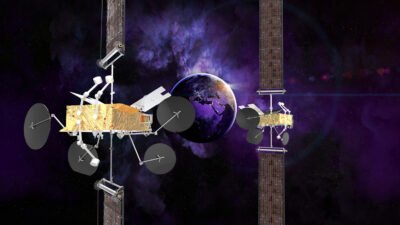
The largest driver of that cost is a proposed constellation of space-based interceptors, or SBIs, which alone would account for about $743 billion. The interceptors would consist of satellites in low Earth orbit designed to destroy ballistic missiles during the “boost phase,” the first few minutes after launch while a missile’s rocket motor is still burning.
The report, released May 12, was prepared at the request of Sen. Jeff Merkley, the ranking Democrat on the Senate Budget Committee. CBO emphasized that the study was not based on a detailed administration blueprint because the Defense Department has not publicly released the architecture it intends to build. Instead, the agency modeled a notional missile defense system derived from the language of Trump’s January 2025 executive order directing the Pentagon to pursue what became known as Golden Dome.
That distinction highlights a disconnect between Congress and the administration over the program. Because CBO works at the direction of Congress, the absence of a detailed Pentagon plan suggests lawmakers still have not received a comprehensive explanation of what the administration intends to field or how it plans to build it.
Space-based interceptors are a defining feature of the architecture, according to the executive order, but CBO concludes they are its central financial challenge.
To destroy a missile during boost phase, the interceptor satellites would need to already be close enough to a launch location to engage within roughly three to five minutes in the case of an intercontinental ballistic missile.
That requirement drives the need for a massive constellation. Because satellites in low Earth orbit continuously move and cannot remain fixed above specific points on Earth, thousands of interceptors would be needed to ensure enough were always positioned near potential launch areas. CBO estimates that about 7,800 interceptor satellites would be required simply to engage a salvo of 10 nearly simultaneous intercontinental ballistic missile launches.
Maintaining that capability over two decades would require about 30,000 satellites in total because the interceptors would orbit at altitudes of roughly 300 to 500 kilometers, where atmospheric drag would gradually degrade their orbits and force replacement roughly every five years.
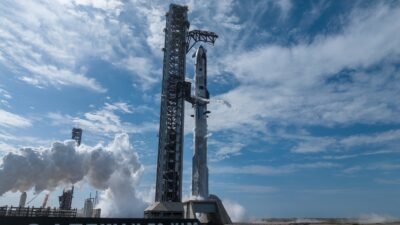
Even under aggressive assumptions about future launch economics, including heavy-lift systems such as SpaceX Starship, the report concludes that launch expenses are not the principal obstacle. The more significant issue is the scale of the constellation and the continuing need to replenish it.
CBO said the interceptor layer would account for roughly 70% of acquisition costs and about 60% of total system costs, reinforcing concerns already raised publicly by Gen. Michael Guetlein, the Pentagon official overseeing Golden Dome, about the affordability of orbital missile interceptors.
CBO explicitly stated that even the notional system it modeled could still be overwhelmed by a large-scale attack from China or Russia.
The report notes that removing space-based interceptors from the architecture would reduce projected costs sharply, lowering the 20-year estimate from $1.2 trillion to about $448 billion.
Analyst: space interceptors unrealistic
Among independent analysts, Todd Harrison of the American Enterprise Institute has reached similar conclusions. Harrison said the CBO analysis reinforces his own view that the Pentagon is unlikely to field an operational space-based interceptor constellation at meaningful scale.
“The architecture the Pentagon is building is not the architecture called for in the executive order, and there is virtually no chance SBIs will be part of it beyond prototyping,” Harrison said in an interview. “SBIs do not scale with the threat and do not have a cost per kill that is competitive with ground-based alternatives.”
Harrison noted that the constellation modeled by CBO would only be capable of intercepting 10 missiles, roughly comparable to the estimated size of North Korea’s intercontinental ballistic missile inventory.
When Harrison previously published his own cost estimates, Guetlein responded that Harrison was not estimating the architecture the Pentagon intends to build.
“But it is also fair to point out that he is not building what is called for in the executive order,” Harrison said.
Harrison speculated that Guetlein appears to be working within a fixed budget ceiling rather than designing a system strictly around the executive order’s ambitions.
“What appears to be the case is that he has been given $185 billion as a cost cap to go build a Golden Dome,” Harrison said. “And I think what my analysis and now what the CBO analysis is showing is that you can build a Golden Dome that’s $185 billion but it will be much less ambitious than what the executive order called for.”
“You get 10 intercepts for $743 billion, so the cost per kill is ridiculously high,” he added.
That likely means space-based interceptors either will not become part of the final operational architecture or will remain limited to development and prototype efforts, Harrison said. The Space Force is currently funding prototype interceptor work with 12 companies.
“There’s no way that they could get to an operational SBI constellation of any size that would be relevant within $185 billion,” Harrison said.
The CBO report points to lower-cost alternatives. Its report concluded that ground-based defenses could provide significant homeland missile defense capability at far lower cost than an orbital interceptor network.
One element in the report’s notional architecture is an “upper wide area layer” consisting of missile fields equipped with 60 midcourse interceptors. Each field would cost about $15 billion to build and equip and roughly $410 million annually to operate. The facilities would include underground interceptor silos, command infrastructure and long-range discrimination radars.
A key takeaway from CBO’s analysis is that “you can do a lot with ground-based defenses,” Harrison said. “So you could actually buy a lot of those and buy a lot of homeland missile defense.”
Not all space elements of Golden Dome are financially out of reach. CBO estimated that the missile-tracking satellite layer supporting the system would cost about $90 billion and suggested those sensors would likely be required regardless of what final architecture the Pentagon ultimately adopts.