TAMPA, Fla. — Apex has raised more than $200 million to expand in-house satellite production capabilities, announcing a funding round June 5 it says nearly doubled the four-year-old manufacturer’s valuation to $2.3 billion.
The funding round was led by investment firms Glade Brook Capital Partners and Washington Harbour Partners, which also joined launch startup Stoke Space’s Series D round last year and have invested elsewhere in the industry.
Apex has now raised more than $718 million to date, according to space analytics provider BryceTech, including a $200 million funding round nine months ago that made it one of the industry’s fastest companies to reach unicorn status, a term for privately held firms valued at $1 billion or more.
Ian Cinnamon, Apex’s cofounder and CEO, said in a media briefing that, as with previous funding rounds, the company was not driven by an immediate need for capital.
“For all these fundraisers we haven’t needed the money,” he told reporters, “but given the excitement, demand and the scale-up, we’ve decided to take on more.”
It took roughly 10 days from seeking funds to being oversubscribed, Cinnamon said, “faster than I’ve ever seen it before,” which he attributed to growing investor conviction in the market’s direction and Apex’s own traction.
Apex “didn’t feel the need to take all the money that was being offered,” he added.
Instead, the company opted to “hunker down and focus on building a real business — take a little bit of money, and then over time, as we continue to make more progress … raise more, eventually think about things like going public, and so on.”
The deal adds to a wave of large capital raises across the industry this year, including a $500 million funding round announced earlier this week for in-space transportation startup Impulse Space.
Bolstering growth
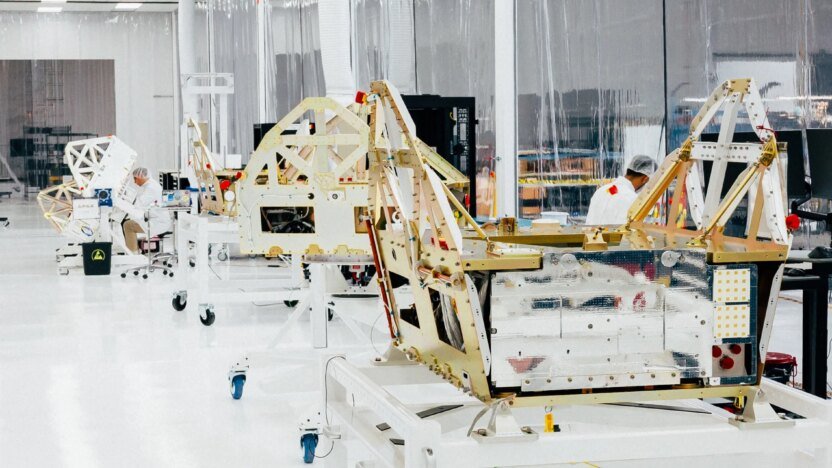
The extra funds will support an additional 2,800 square meters of office space at Apex’s Factory One manufacturing facility in Los Angeles, where it has more than doubled staff in the past year to over 350 employees.
Cinnamon said Apex is also continuously reviewing satellite subcomponents to determine where more work needs to be brought in-house to avoid supply-chain bottlenecks as it grows.
“What we end up doing is … working with suppliers to pre-buy a lot of inventory, we will also look at acquiring companies — like we acquired [satellite propulsion specialist] Phase Four’s assets last year, or we go and we vertically integrate,” he said.
According to Cinnamon, Apex’s Aries satellite bus, the smallest of three platforms supporting payloads from roughly 100 kilograms to more than 3,000 kilograms and its first sent to orbit in 2024, is about 30% vertically integrated.
More than 70% of mid-range Nova, slated to fly for the first time in about a month, is developed in-house, he continued, “and over time we’re going to get pretty much to 100% vertical integration as we continue to scale up [and] need to source just higher and higher volumes of parts.”
Meeting demand
With two-thirds of Apex’s current business coming from the defense and intelligence community, the company sees its biggest opportunities ahead as government-led.
“Nearly every single major defense prime is a customer of Apex,” Cinnamon said, without going into details.
Earlier this month, Northrop Grumman announced it was partnering with Apex on space-based interceptors for the U.S. Golden Dome missile defense initiative.
Cinnamon declined to provide additional details about the partnership, referring questions to Northrop, but said its separate Project Shadow space-based interceptor demonstration, using Nova, would “significantly de-risk this idea of an orbital magazine.”
Project Shadow is intended to show that Nova and Comet, a larger group of satellite buses Apex unveiled in April, can serve as the backbone for future space-based interceptor systems.
Apex is self-funding Project Shadow to the tune of $15 million, despite uncertainty around Golden Dome’s long-term architecture and funding.
Cinnamon said the technology “will be applicable to other things as well,” even if specific programs evolve.
“But it is a gamble,” he continued. “It’s a bet that we’re making, and that’s the beauty of a company like Apex … we can afford to make those bets.”
On the commercial side, he pointed to remote sensing missions, communications and emerging concepts such as orbital data centers as areas where Apex’s standardized platforms could be a fit.
“With orbital data centers, it turns out a lot of what you would need for [a] higher power radar platform, like Comet was designed for, happens to be a really good fit for those as well. So we see a lot of traction there too.”
Apex said other new and existing investors also participated in the funding round but did not name them.