WASHINGTON — A high-risk mission to raise the orbit of a NASA astrophysics spacecraft is set to launch later this month after less than a year of development.
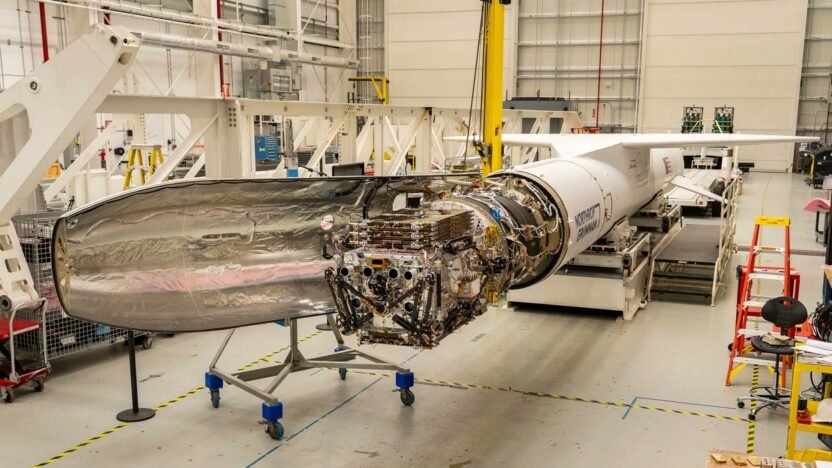
Link, a spacecraft developed by Katalyst Space Technologies, is scheduled to launch June 27 on a Northrop Grumman Pegasus XL rocket. The air-launched vehicle will operate out of Kwajalein Atoll in the Pacific Ocean.
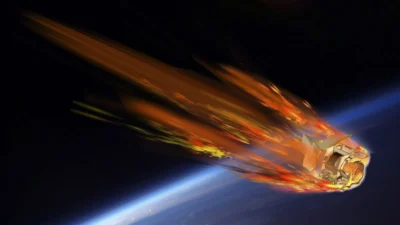
Link is designed to approach and then grapple NASA’s Neil Gehrels Swift Observatory, a gamma-ray observatory in low Earth orbit. The orbit of that spacecraft, launched in 2004, has been decaying due to atmospheric drag and could reenter as soon as late this year. Link will raise Swift’s orbit, allowing it to continue operations for years to come.
NASA selected Katalyst last September to develop Link under a $30 million contract. While the reboost mission has yet to launch, officials said simply getting to this point was a success.
“I have to be honest, no one thought it was going to be possible. No one thought we would get as far as we’ve already gotten today,” said Shawn Domagal-Goldman, director of NASA’s astrophysics division, at a June 17 briefing at NASA’s Wallops Flight Facility, where Link was integrated with the Pegasus rocket.
He credited both the teams at Katalyst and Northrop for being ready to launch quickly, as well as those within the agency. “People didn’t think the agency itself could bureaucratically do something this fast, and yet we did.”
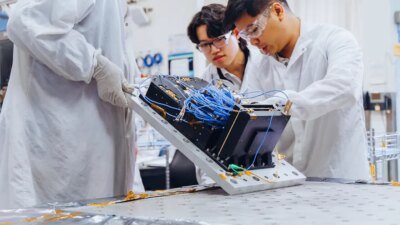
“Over the last nine months, we have gone from a clean sheet to a spacecraft that is currently integrated on a rocket on an airplane ready to go to Kwaj for launch,” said Kieran Wilson, principal investigator for Link at Katalyst. “This is an absolutely unprecedented development timeline.”
He credited the “exceptional urgency” NASA emphasized in the mission requirements. “When we set out, one of the very few requirements from the NASA team was, you must launch before it’s too late, and we have been able to meet that readiness timeline.”
Link must launch and reach Swift before that spacecraft’s altitude descends below 300 kilometers. Brad Cenko, principal investigator for Swift at NASA’s Goddard Space Flight Center, said Swift should reach that altitude in October based on current estimates of the spacecraft’s decaying orbit.
“At the moment we think we have several months where Swift will be at a sufficiently high altitude to give Katalyst folks a great chance to capture and boost us,” he said.
That capture and boost will be risky. Swift was not designed to be serviced and lacks grappling fixtures that Link could use. Link is also Katalyst’s first satellite servicing mission.
Wilson said the docking will be helped by the fact that Swift is still operational and can control its attitude. “Swift is an unprepared but cooperative partner in the rendezvous,” he said.
As Link approaches within tens of meters, Swift will maneuver in tandem, allowing Link to inspect potential capture locations and determine which are free of debris, such as crumbling multilayer insulation, that might interfere with grappling.
“We have primary, backup and secondary backup options for features that we believe are suitable for capture using our robotics,” he said. Link is equipped with three robotic arms that will attempt to attach to different points on Swift, but the reboost mission can proceed with only one arm attached to Swift.
He argued, though, that the risks of the capture and reboost were secondary to simply getting the spacecraft ready in time. “When we kicked off the program, I think everyone recognized the biggest risk would be that we weren’t ready to launch in time,” he said. “We have been able to retire that risk over the last few months by building, testing, getting ready to operate a spacecraft.”
“We’re confident that as long as we have a spacecraft that can function at a fundamental level, that gives us the freedom and flexibility to work through any issues that we find during rendezvous and the more challenging dynamical operations,” he added.
“From a programmatic standpoint, I consider this a success already just from the fact that we’re even going to try this,” Domagal-Goldman said.
He acknowledged there are risks remaining regarding Link’s ability to capture and reboost Swift, as well as uncertainties about space weather conditions that could accelerate Swift’s orbital decay and complicate the reboost effort.
“There still might be risks that we cannot control ahead of us,” he said. “I’m just deeply thankful that we’re even giving this a go.”