WASHINGTON — NASA plans to continue exchanging International Space Station crews about every six months after considering longer stays.
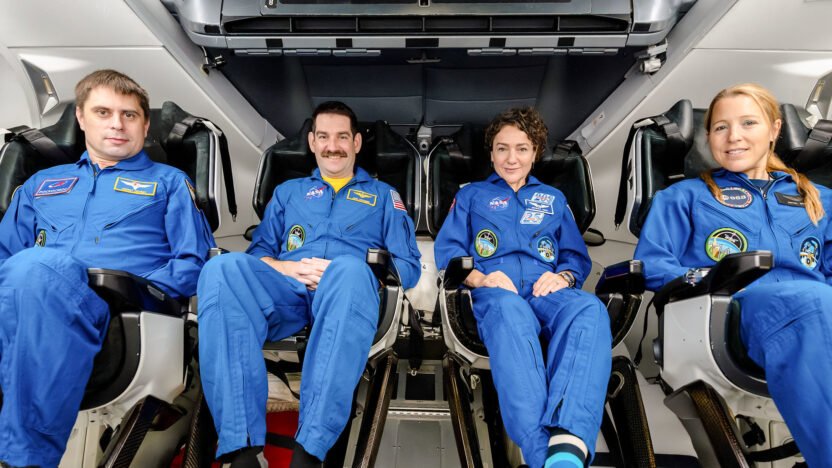
NASA announced May 1 that the next commercial crew mission to the ISS, SpaceX’s Crew-13, will launch in mid-September rather than November. A Crew Dragon spacecraft will bring to the station NASA astronauts Jessica Watkins and Luke Delaney along with Canadian Space Agency astronaut Joshua Kutryk and Roscosmos cosmonaut Sergey Teteryatnikov.
NASA did not disclose details about its decision to move up the Crew-13 launch, but an agency official said at a May 11 briefing it was part of efforts to maximize use of the ISS before its scheduled retirement at the end of the decade.
“As Administrator Isaacman has talked about, we’re trying to get the most out of station as we can, and so we were able to move up that next mission,” said Bill Spetch, NASA ISS operations and integration manager.
NASA started discussing last year plans to extend missions from six to eight months, which would have the effect of flying one fewer mission every two years. When Crew-11 launched in August 2025, NASA had not yet committed to an eight-month stay, saying it was still working on certifying Crew Dragon for that extended time in orbit.
The agency, though, did expect Crew-12 to spend eight months in space when it launched to the station in mid-February. Under the revised schedule, it will spend about seven months in space.
“We plan to stay on about that six-month cadence as we go forward,” Spetch said. “It will vary a little bit. Our flight schedule is quite busy, so it may not be exactly six months in between each mission.”
Roscosmos, which also had exchanged crews on Soyuz spacecraft every six months, started flying missions every eight months in 2024. Its next mission, Soyuz MS-29, is scheduled for launch in July, eight months after the launch of Soyuz MS-28.
Crew-13 and Soyuz MS-29 are part of an ISS schedule that includes the launch of cargo Dragon missions on May 12 and again in the fall, along with a Progress cargo spacecraft launching in early September and a Northrop Grumman Cygnus launching in late fall or early winter.
Absent from the schedule is Boeing’s CST-100 Starliner. Early this year, NASA said it was planning for a cargo-only test flight of that crewed spacecraft, Starliner-1, as soon as early April. However, that was before the release Feb. 19 of a report sharply criticizing NASA and Boeing’s handling of Starliner’s flawed Crew Flight Test (CFT) mission in 2024.
At the time NASA released the report, Isaacman did not rule out flying the cargo Starliner-1 mission in April, but added that it would do so only when the investigation into the Crew Flight Test mission and corrective actions were complete. “But we are not going to fly again, crewed or uncrewed, until it’s ready,” he said.
Neither NASA nor Boeing have provided substantive updates on Starliner since that report. NASA, in its release of the schedule of upcoming missions May 1, said only that launch opportunities for Starliner-1 “remain under review as teams continue working through technical issues” from the CFT mission.
“We continue to maintain as close to launch readiness as possible on Starliner-1,” Spetch said, with the investigation into the issues seen on CFT ongoing. “We will end up flying it when it’s ready.”
He acknowledged, though, there are limited opportunities to fly Starliner-1 this year. “Our schedule is pretty busy, but we’re trying to maintain windows where we can go fly that.”